


 Tiếng Việt
Vietnam is one of the world’s major Robusta coffee origins. For international buyers, however, production volume is only one part of the story.
The more important questions are:
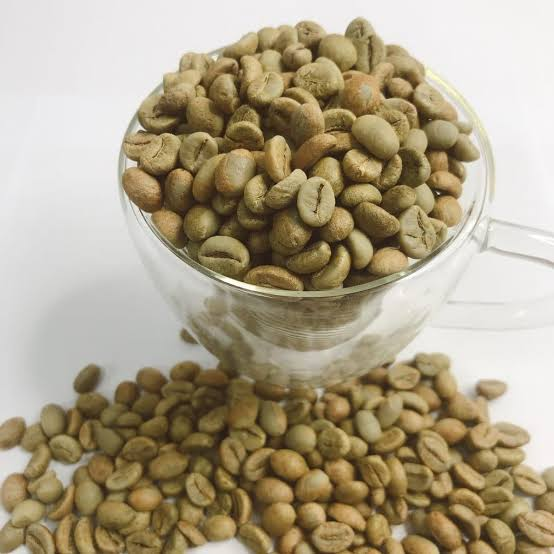
To understand Vietnamese Robusta green coffee, we need to look at the complete supply chain — from variety and growing conditions to processing, grading, storage and export.
1. Variety Sets the Foundation of the Green Bean
Most Robusta coffee grown in Vietnam belongs to the species Coffea canephora.
The genetic characteristics of the plant can influence:
- Fruit development
- Bean size
- Yield
- Ripening behavior
- Adaptability to local conditions
- Chemical composition
- General physical characteristics of the green bean
However, variety is only one part of the quality equation.
Two farms may grow Robusta from the same species but produce different green coffee characteristics. Differences in soil, altitude, climate, water availability, nutrition, shade and farming practices can all affect the development of the fruit and seed.
For this reason, “Vietnamese Robusta” should not be treated as one completely uniform product. The specific growing area, farm conditions and crop year still matter.
2. Growing Conditions Affect Bean Development
Vietnam’s Central Highlands is the country’s main Robusta-producing region. Important coffee-growing areas include Đắk Lắk, Lâm Đồng, Gia Lai and Đắk Nông.
During fruit development, the coffee plant needs a suitable balance of:
- Water
- Nutrients
- Sunlight
- Temperature
- Soil conditions
- Plant health
These factors support the development of the cherry and the accumulation of dry matter inside the seed.
When the plant receives suitable water and nutrition, the fruit can develop more evenly. When the plant experiences water stress, poor nutrition or unfavorable weather, fruit development and bean filling may be affected.
This can lead to differences in:
- Bean size
- Density
- Maturity
- Moisture behavior
- Defect levels
- Lot uniformity
This is why origin information is important for B2B buyers. A country name provides a general reference, but it does not describe every physical characteristic of every lot.
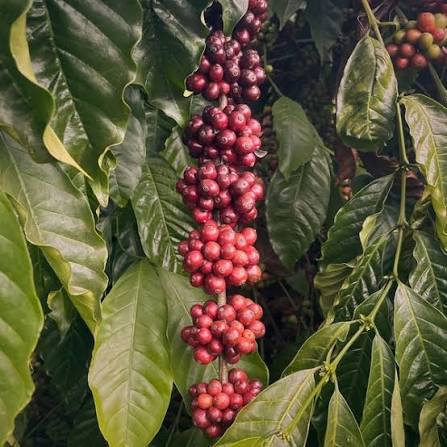
3. Harvest Maturity Influences Green Coffee Quality
Harvest maturity is one of the first factors affecting green coffee quality.
As the coffee cherry matures, the composition of the fruit and seed changes. The seed continues to develop, and the balance of dry matter and chemical compounds also changes during this period.
If cherries are harvested too early, the beans may not have reached their full development. A high percentage of immature cherries can result in greater variation in the green coffee lot.
Immature beans may also affect:
- Bean color
- Density
- Roasting behavior
- Cup performance
- Overall lot uniformity
Overripe cherries and cherries that have fallen to the ground create different risks. They may increase the possibility of uncontrolled fermentation, contamination or physical defects.
For this reason, raw material management is important before processing even begins.
A consistent green coffee lot depends not only on the processing method, but also on the quality and maturity of the cherries entering the process.
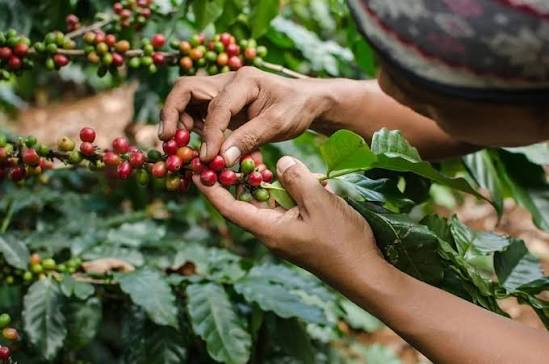
4. Processing Changes the Characteristics of the Green Beans
Vietnamese Robusta can be processed through different post-harvest systems.
Natural Processing
With natural processing, the coffee cherries are dried with the fruit layers still surrounding the seed. After drying, the dried outer layers are removed during hulling.
This method requires careful control of:
- Drying time
- Moisture reduction
- Layer thickness
- Turning frequency
- Weather conditions
- Air circulation
- Protection from rain and contamination
If drying is too slow or uneven, the coffee may be exposed to undesirable fermentation, mold development or inconsistent moisture levels.
If drying is too fast or poorly controlled, the physical condition of the beans may also be affected.
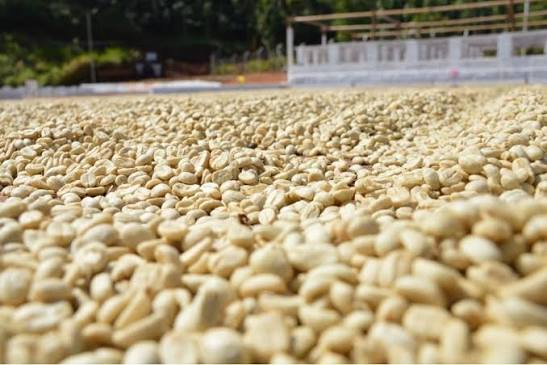
Mechanical Processing and Cleaning
Other processing systems remove the outer layers through mechanical operations before the beans are dried, cleaned and prepared for storage.
Depending on the product specification, the coffee may also go through additional cleaning or mechanical polishing processes.
These processes can influence:
- Surface appearance
- Cleanliness
- Remaining husk or parchment
- Foreign matter
- Physical uniformity
- Roasting performance
The processing method should therefore be clearly stated in the product specification. It helps the buyer understand how the green beans were handled and what characteristics to expect.
5. Drying Is Critical for Storage Stability
After processing, the coffee must be dried to an appropriate moisture level.
Moisture is one of the most important parameters in green coffee because it affects storage stability, physical condition and quality preservation.
If moisture is too high, the coffee may be more vulnerable to:
- Mold development
- Unwanted fermentation
- Quality deterioration
- Changes during storage
- Reduced shelf stability
However, excessive drying or unsuitable drying conditions can also affect the beans. The objective is not simply to remove as much moisture as possible. The objective is to reach a suitable and stable moisture level according to the agreed specification.
For each contract, the buyer and seller should clearly define:
- Target moisture range
- Testing method
- Sampling procedure
- Acceptable tolerance
- Packaging requirements
- Storage and shipping conditions
Moisture should be checked before shipment and, where required, again upon arrival.
6. Cleaning and Grading Determine Lot Uniformity
After drying, green coffee still needs to be cleaned and graded.
The purpose is to remove or control unwanted materials and to create a lot that is more consistent in size and physical condition.
Depending on the product and buyer requirements, the process may include:
- Foreign matter removal
- Screen-size grading
- Black bean control
- Broken bean control
- Defect removal
- Light bean separation
- Moisture testing
- Lot uniformity checks
- Final quality inspection
This is why two Robusta lots from the same country, region or crop year can have different commercial values.
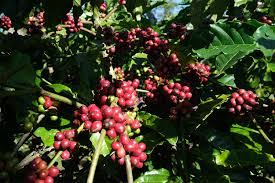
The value of a lot depends not only on its origin. It also depends on how the coffee was harvested, processed, dried, cleaned, graded and inspected.
For B2B buyers, the key question is not only:
What is the origin?
It is also:
How was the lot prepared, and can the same specification be maintained from shipment to shipment?
7. What Do S13, S14, S16 and S18 Mean?
Green coffee beans are commonly classified by screen size.
Screen size refers to the physical size category of the beans, based on the size of the openings used during grading.
Common Vietnamese Robusta specifications include:
- S13
- S14
- S16
- S18
In general, a larger screen number represents a larger bean-size category.
However, screen size does not automatically mean higher quality.
An S18 lot is not necessarily better than an S16 lot if the two lots have different:
- Moisture levels
- Defect tolerances
- Black and broken percentages
- Foreign matter levels
- Processing methods
- Density
- Uniformity
- Storage conditions
Screen size is mainly a physical and commercial specification. It helps buyers define the expected bean-size distribution and improve consistency during roasting.
It should be evaluated together with the complete quality specification.
8. Why Are Black, Broken and Other Defects Important?
Bean size alone cannot determine the quality of green coffee.
Physical defects provide additional information about the condition and consistency of a lot.
Black Beans
Black beans may be associated with problems during fruit development, harvesting or post-harvest handling. They can affect the appearance of the lot and may also influence roasting and cup quality.
Broken Beans
Broken beans may occur during hulling, cleaning, mechanical handling, transportation or storage.
A high percentage of broken beans can create greater variation during roasting because smaller pieces may heat faster than whole beans.
Other Defects
Depending on the buyer’s standard, other defects may also be controlled, including:
- Insect-damaged beans
- Immature beans
- Moldy beans
- Sour or fermented beans
- Floater beans
- Shells
- Foreign matter
- Unusual discoloration
The exact classification and tolerance depend on the agreed standard and contract specification.
A professional green coffee specification should clearly define the main quality parameters, including:
Screen size + moisture + defect tolerance + black and broken beans + foreign matter + processing method + crop year + lot information
Additional requirements can be added according to the buyer’s application and market.
9. Density and Bean Uniformity Affect Roasting
Green coffee is the raw material for roasting. It is not consumed directly.
During roasting, heat changes the structure and chemical composition of the bean. The way heat enters and moves through the bean can be influenced by:
- Bean size
- Moisture
- Density
- Physical structure
- Processing condition
- Degree of uniformity
- Defect levels
When a lot contains beans with significantly different sizes or moisture levels, the beans may not develop at the same rate during roasting.
Some beans may roast faster, while others may require more time to reach the desired development. This can affect color consistency, roast loss, flavor balance and overall batch performance.
For this reason, professional roasters do not purchase green coffee based on origin name alone.
They also need:
- Stable physical specifications
- Consistent screen-size distribution
- Controlled moisture
- Acceptable defect levels
- Reliable lot information
- Repeatable supply from shipment to shipment
A clear specification helps the roaster develop a suitable roasting profile and maintain consistency across batches.
10. Why Is Vietnamese Robusta Suitable for Large-Scale Sourcing?
Vietnam has a large Robusta production base and an established export infrastructure.
This gives international buyers access to green coffee in different:
- Screen sizes
- Quality grades
- Processing methods
- Volumes
- Packaging formats
- Delivery schedules
- Commercial specifications
Vietnamese Robusta can be used by:
- Coffee roasters
- Green coffee traders
- Instant coffee manufacturers
- Blending companies
- Beverage producers
- Industrial coffee manufacturers
However, large production volume does not automatically guarantee uniform quality.
To turn production scale into a reliable sourcing advantage, quality must be controlled throughout the supply chain:
Origin → Farm → Harvest → Processing → Drying → Cleaning → Grading → Storage → Quality Control → Export
Each stage can affect the final green coffee lot.
For international buyers, reliable sourcing depends on more than availability. It also depends on whether the supplier can provide clear specifications, consistent quality, proper documentation and stable shipment performance.
11. What Makes Vietnamese Robusta Green Coffee Different?
There is no single factor that explains the characteristics of Vietnamese Robusta green coffee.
The final quality of a lot is influenced by the combination of:
- Variety
- Growing region
- Soil and climate
- Farming practices
- Harvest maturity
- Processing method
- Drying conditions
- Cleaning and grading
- Storage environment
- Quality-control procedures
- Buyer-specific specifications
Vietnamese Robusta offers several commercial advantages:
- Large production capacity
- Multiple screen-size options
- Different quality grades
- Flexible processing specifications
- Established export channels
- Availability for both spot and long-term sourcing
For international buyers, the value of Vietnamese green coffee is not only its country of origin.
The real value is whether the origin can be identified, the quality can be measured, the specification can be documented and the same requirements can be maintained consistently from lot to lot.
Nam Son Vietnamese Robusta Green Coffee
At Nam Son, we supply Vietnamese Robusta green coffee according to the specific requirements of international buyers.
Depending on the product and contract, specifications may include:
- Screen size: S13, S14, S16 or S18
- Moisture
- Black and broken beans
- Defect tolerance
- Foreign matter
- Processing method
- Crop and lot information
- Packaging
- Shipment requirements
We work with buyers who need green coffee for roasting, blending, manufacturing and long-term sourcing programs.
Our focus is on clear specifications, reliable supply, professional documentation and long-term B2B cooperation.
Looking for Vietnamese Robusta green coffee?
Send us your required screen size, quality specification, volume and delivery schedule.
☕ Vietnam Robusta Green Coffee — From Origin to Global Markets.
