


 Tiếng Việt
For international cashew buyers, checking a sample is not simply about looking at whether the kernels appear white, large, and clean.
A professional cashew kernel inspection should evaluate the sample from several levels — from serious defects that can affect food safety, edibility and commercial acceptance, to secondary appearance defects that influence grade, roasting performance and final product value.
For B2B purchasing, the key is to identify these issues before approving the commercial lot, rather than discovering them after shipment.
At Nam Son Co., Ltd, we recommend that buyers evaluate cashew samples systematically according to the agreed specification, destination-market requirements and end use.
1. Start With the Most Important: Serious Defects
The first inspection should focus on defects that can significantly affect the safety, edibility or commercial quality of the cashew kernels.
According to the Association of Food Industries (AFI), serious damage includes conditions such as insect damage, visible mold, rancidity, decay, adhering matter and impacted shell. AFI’s current cashew specification also sets specific tolerances for serious damage depending on the quality grade.
Insect Damage
Check carefully for:
- Visible insect feeding damage
- Insect fragments
- Frass or powdery residue
- Webbing
- Evidence of insect activity
- Damage inside the kernel
This should be one of the first checks because a visually attractive sample can still have an underlying infestation issue.
Under the AFI specification, insect damage is specifically defined and controlled, with a maximum tolerance depending on the agreed quality grade. (Afius)
Mold
Look for:
- Visible mold growth
- Unusual surface discoloration
- Mold-related odor
- Damp or abnormal appearance
A sample should not be evaluated only by visual inspection when mold or abnormal odor is suspected.
Rancidity and Off-Flavors
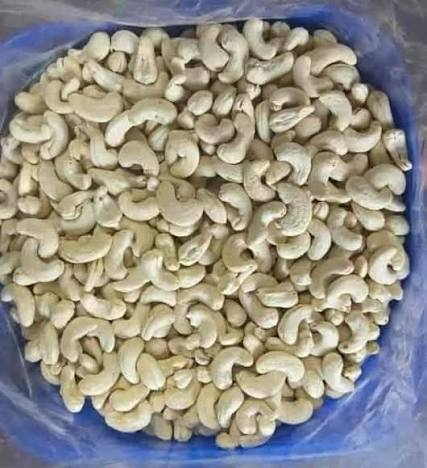
Cashew kernels contain oil, making oxidative deterioration an important quality consideration.
Do not rely only on appearance.
A professional inspection should also consider:
- Aroma
- Taste
- Oil deterioration
- Unusual or stale flavor
- Off-aroma after opening the package
AFI defines rancidity as deterioration of the kernel’s oils resulting in an off-flavor or aroma and notes that confirmation of rancidity should involve sensory evaluation.
2. Check Decay, Rot and Abnormal Kernels
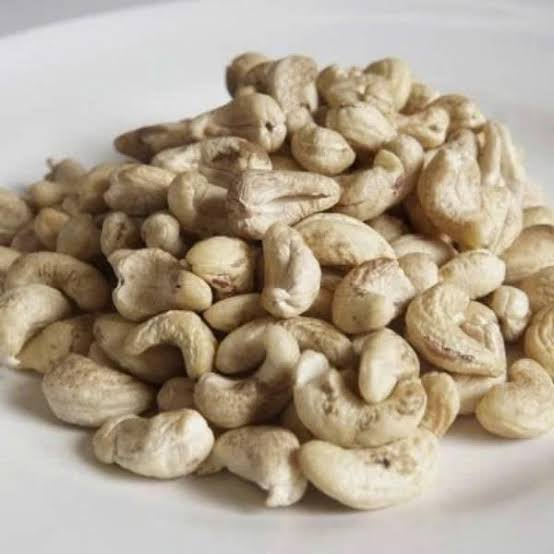
The next level is checking whether the kernels show signs of deterioration.
Pay attention to:
- Decay
- Rot spots
- Severe discoloration
- Extremely shriveled kernels
- Abnormally developed kernels
- Damaged kernels with unusual internal appearance
These conditions are not simply cosmetic issues. They can affect the commercial usability of the lot and may fall within serious-damage requirements depending on the standard and grade being applied.
3. Foreign Matter and Shell Fragments
A clean cashew sample should be checked for materials that do not belong in the finished kernel product.
Inspect for:
- Shell fragments
- Adhering shell
- Testa fragments
- Dust
- Plant material
- Other extraneous matter
AFI specifies a very low tolerance for harmless extraneous matter — 0.01% in its raw-kernel quality table. (Afius)
This is particularly important for buyers purchasing cashews for:
- Retail packing
- Roasting
- Snack production
- Food manufacturing
- Further processing
4. Then Check the Kernel Grade
Once the sample passes the serious-defect inspection, buyers should move to commercial grade evaluation.
The same kernel can look acceptable at first glance but still belong to a lower commercial grade because of color, scorching, blemishes, shriveling or other defects.
AFI classifies cashew kernels into quality categories including First Quality Fancy, Second Quality Scorched, Third Quality Special Scorched, Lightly Blemished Wholes/Pieces and Dessert Blemished Wholes.
Color
For First Quality Fancy, AFI describes the acceptable color as:
- White
- Light yellow
- Pale ivory
Lower grades can allow progressively darker or more varied colors.
Therefore, buyers should compare the sample against the approved color specification, rather than simply asking whether the kernels look “white”.
5. Scorched Kernels
Scorching is another important defect to identify.
It refers to discoloration caused by overheating during processing such as shelling or blanching.
When checking a sample, separate:
- White/fancy kernels
- Lightly scorched kernels
- Scorched kernels
- Darkly scorched kernels
A higher percentage of scorched kernels can change the commercial grade and therefore the price positioning of the shipment.
6. Blemishes and Discoloration
Not every brown mark means the same thing.
Buyers should distinguish between:
- Natural color variation
- Light brown lines
- Speckles
- Surface spots
- Loops or swirls
- Pitted black or brown spots
- Processing-related discoloration
AFI defines blemishes/discoloration based on their appearance and effect on the kernel, and tolerances vary by grade.
This is why a buyer should not simply specify “white cashew” without defining the acceptable defect tolerance.
7. Check Immature and Shriveled Kernels
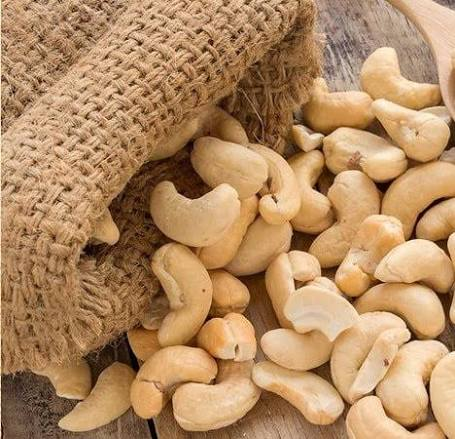
A professional inspection should also identify kernels that are:
- Underdeveloped
- Thin
- Shriveled
- Irregularly formed
- Smaller than the expected commercial grade
AFI defines an immature kernel as one that is underdeveloped and does not have the characteristic shape of a cashew kernel. Slightly shriveled and severely shriveled kernels are also treated differently within the grading system.
These defects can have a significant effect on:
Appearance → Grade → Yield perception → Roasting performance → Buyer acceptance
8. Check Adhering Testa
Another detail that buyers should not overlook is adhering testa.
Testa is the natural skin surrounding the cashew kernel.
A small amount may be treated differently from excessive adhering testa, depending on the agreed specification. AFI provides specific criteria for when adhering testa becomes a defect or serious damage. (Afius)
When inspecting a sample, check:
- Amount of remaining testa
- Location of the testa
- Surface area affected
- Whether the testa can be removed during normal processing
9. Surface Damage and Knife Scrapes
Cashew kernels can also show mechanical damage caused during processing.
Look for:
- Deep knife cuts
- Scrapes
- Surface damage
- Disfigurement
- Irregular edges
AFI defines superficial damage in relation to deep knife cuts that affect the appearance or characteristic shape of the kernel, with specific tolerances according to grade. (Afius)
This is particularly relevant when purchasing premium whole kernels, where appearance is a major part of the product value.
10. Don’t Forget the Size Specification
After checking defects, buyers should verify whether the kernels actually correspond to the agreed size.
Common commercial designations include:
- W180
- W210
- W240
- W320
- W450
- Splits
- Pieces
The “W” grades are whole-kernel size designations, while splits and pieces represent different physical forms.
But there is an important point:
A sample should not be accepted based on the size label alone.
The buyer should verify the actual size distribution against the agreed specification.
AFI’s analytical method calls for determining the percentage of smaller and larger grade whole cashews and uses defined sampling and measurement procedures. (Afius)
11. Check Whole, Splits and Pieces
For a whole-kernel specification, buyers should inspect whether kernels are actually intact.
Check for:
- Whole kernels
- Chipped kernels
- Splits
- Butts
- Broken pieces
For example, AFI defines a split as one half of a kernel split lengthwise, subject to the specified dimensional condition. (Afius)
This distinction matters because a shipment sold as a particular whole-kernel grade should not contain an excessive amount of lower-value broken material.
12. Moisture Should Not Be Ignored
Appearance is only one part of quality.
Buyers should also confirm the moisture specification agreed in the purchase contract.
Moisture can influence:
- Shelf stability
- Texture
- Storage performance
- Risk of deterioration
- Packaging performance
- Commercial weight
The exact acceptable moisture specification should be agreed according to the buyer’s destination, product application and contract requirements rather than assuming one universal number.
13. Raw Sample vs. Roasted Sample
This is one of the checks that many buyers overlook.
Some defects may become more apparent after roasting.
AFI’s analytical method includes separate evaluation of defects after roasting, including:
- Spotting after roast
- Scorched tips
- Color variation
- Dark roast
- Deep roast
- Scrapes after roasting
- Uneven roast
AFI therefore recommends roasting a defined composite sample when evaluating these characteristics. (Afius)
For buyers supplying roasted cashew products, this step can be particularly important.
A Practical B2B Cashew Sample Inspection Checklist
Before approving a sample, international buyers should check at least these five groups:
| Inspection level | What to check |
|---|---|
| 1. Serious defects | Insect damage, mold, rancidity, decay, impacted shell |
| 2. Physical cleanliness | Foreign matter, shell fragments, adhering matter, testa |
| 3. Commercial defects | Scorching, discoloration, blemishes, shriveling, immature kernels |
| 4. Grade & size | W180, W210, W240, W320, W450, splits, pieces |
| 5. Sensory & processing | Aroma, taste, rancidity, roasting behavior, spotting after roasting |
The most important principle is simple:
Do not inspect only the “good-looking” kernels. Inspect the entire representative sample.
Sample Inspection Should Represent the Commercial Lot
One of the most important points for B2B buyers is sampling methodology.
A small hand-picked sample can create a misleading impression if it does not represent the actual shipment.
AFI’s sampling plan specifies random sampling from multiple locations within packages. Its analytical method uses composite samples for different measurements, including 1,000 g for breakage, 500 g for defects and 200 g for sieve-based size analysis. (Afius)
This means that the buyer and supplier should agree in advance on:
- Sampling method
- Number of cartons/bags sampled
- Inspection quantity
- Defect classification
- Calculation method
- Acceptance tolerance
- Reference sample
- Pre-shipment approval procedure
Why the Approved Sample Matters
For international B2B transactions, the approved pre-shipment sample should be treated as an important quality reference.
AFI’s specification states that a delivery is acceptable provided it is equal to or better than the approved pre-shipment sample for the applicable quality context, and recommends retaining a sealed sample for potential quality disputes. (Afius)
For buyers and suppliers, this creates a much clearer commercial reference than relying on general terms such as:
“Premium Cashew”
“White Cashew”
“High Quality”
Instead, the contract should define measurable parameters.
What Should Buyers Specify Before Ordering Cashew Kernels?
Before requesting a quotation, international buyers should ideally provide:
Product: Cashew Kernels
Grade: W180 / W210 / W240 / W320 / W450 / Splits / Pieces
Color: White / Scorched / Other agreed grade
Defect tolerance: According to agreed standard
Moisture: Buyer-defined specification
Foreign matter: Agreed tolerance
Processing: Raw / roasted / other
Packing: Bulk / retail / private label
Quantity: Required volume
Destination: Import country and port
Inspection: Pre-shipment inspection / agreed inspection standard
The clearer the specification, the easier it is for both parties to evaluate price against actual quality.
Final Takeaway for Cashew Buyers
When checking a cashew kernel sample, size and color are only the beginning.
A professional B2B inspection should move from:
Serious defects → Cleanliness → Physical defects → Grade → Size → Sensory quality → Roasting performance → Commercial specification.
A W320 sample may look attractive, but that does not automatically mean it meets your purchasing specification.
Likewise, a sample with a small amount of discoloration is not necessarily unacceptable — the key is whether the defect falls within the agreed grade tolerance and destination-market standard.
For international buyers, the safest approach is to define the specification first, inspect a representative sample, approve the reference sample, and then verify that the commercial lot matches the agreed parameters.
Nam Son Co., Ltd. supplies Vietnamese cashew kernels for international B2B buyers with specifications adapted to buyer requirements, product applications and export markets.
📩 Looking for W180, W210, W240, W320, W450, Splits or Pieces?
Contact us for product specifications, samples, packing options and quotation.
SEO information
SEO Title: Cashew Kernel Sample Inspection: Defects Buyers Must Check
Meta Description: Learn how international buyers should inspect cashew kernel samples, from serious defects such as mold, rancidity and insect damage to color, scorching, size, blemishes and roasting quality.
Suggested URL slug:/cashew-kernel-sample-inspection-defects-buyers-check/
Primary keyword: cashew kernel sample inspection
Secondary keywords: cashew kernel defects, cashew quality inspection, cashew kernel specifications, cashew W320 quality, cashew W240 supplier, Vietnam cashew supplier, B2B cashew exporter
Nguồn kiểm chứng
- Association of Food Industries (AFI) – Specifications for Cashew Kernels, adopted September 2023: grading, defect definitions, tolerances, sampling and analytical methods. (Afius)
- AFI Food Standards — xác nhận đây là bộ tiêu chuẩn ngành của AFI dành cho cashew kernels xuất sang thị trường Mỹ. (Afius)
- Global Cashew Council – Standards, Grades & Forms — tham chiếu thêm về dung sai đối với mold, rancidity, pest damage, shriveling, superficial damage và foreign matter. (cashews.org)
Lưu ý quan trọng: Các con số dung sai trong bài trên được dẫn theo AFI, không nên quảng cáo như một “mức chuẩn chung cho mọi quốc gia”. Khi chốt hợp đồng, cần ghi rõ standard áp dụng (AFI/contract specification/import-market requirement) vì yêu cầu có thể khác theo thị trường và buyer.
