


 Tiếng Việt
News
How Black and Broken Green Coffee Beans Affect Roasted Coffee Quality
Nov
Introduction
Green coffee quality is influenced by more than origin, screen size and moisture content. Physical defects can also affect how beans behave during roasting and the sensory quality of the final cup.
Two defects that buyers and roasters commonly assess are black beans and broken beans. Although both are classified as defects in green coffee grading, they present different challenges.
Black beans are primarily a concern because they may introduce undesirable flavors. Broken beans are more directly associated with physical damage and uneven roasting. Their actual impact depends on the defect type, its proportion in the lot, the roasting process and the intended use of the coffee.
Understanding these differences helps buyers establish clearer specifications and helps roasters assess the suitability of a green coffee lot.
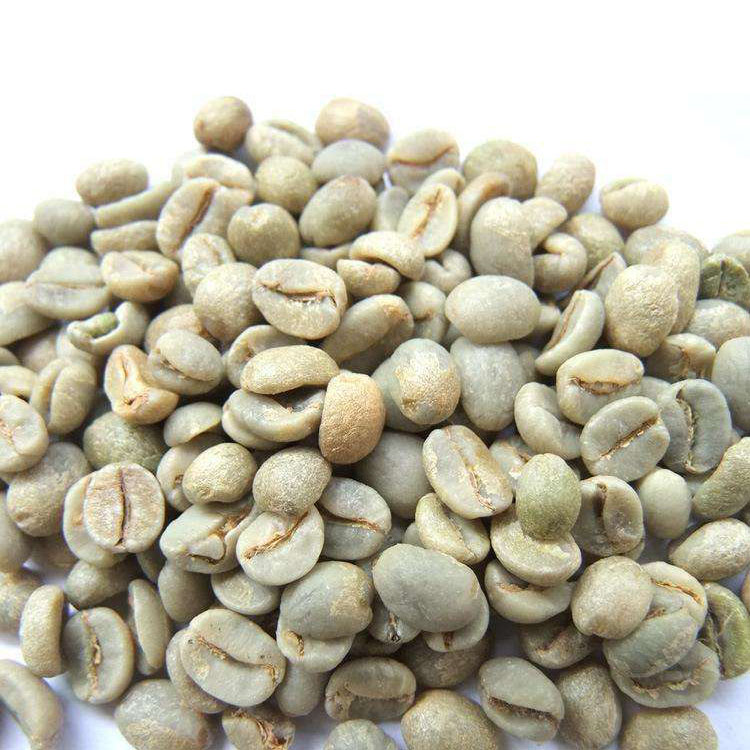
1. What Are Black and Broken Green Coffee Beans?
Black beans
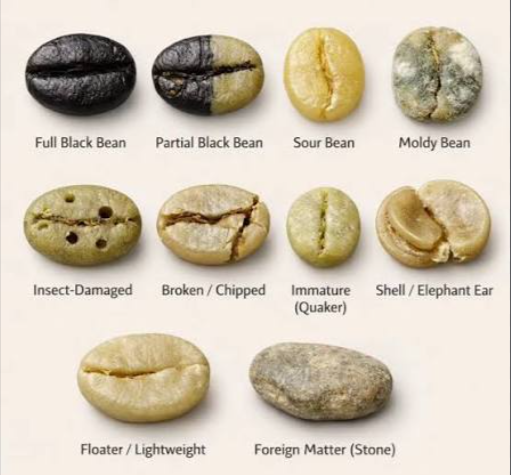
A black bean is a green coffee bean whose interior, exterior or both show black discoloration. In some grading systems, a bean is classified as black when at least half of its surface or interior is black. Exact definitions and defect-counting methods can vary by standard.
Black beans may develop for different reasons, including problems during cherry development, harvesting, fermentation or drying. For example, coffee cherries that remain on the ground may undergo prolonged fermentation, while poor drying conditions can contribute to discoloration and quality deterioration.
The appearance of a black bean is a warning sign, but appearance alone does not identify the exact cause. Inspection and, where necessary, sample roasting and cup evaluation are needed to assess its significance.
Broken beans
Broken beans are coffee beans that have been physically fractured or damaged, often during processing, hulling, milling or handling.
The International Coffee Organization (ICO) distinguishes broken beans from smaller bean fragments. In its classification, a broken bean is a fragment equal to or greater than half of a bean, while a bean fragment is smaller than half. Buyers should use the definition specified in their contract or grading method when assessing a lot.
Broken beans may have exposed surfaces and different physical dimensions from intact beans. These differences can influence their response to heat during roasting.
2. How Black Beans Affect Roasted Coffee Quality
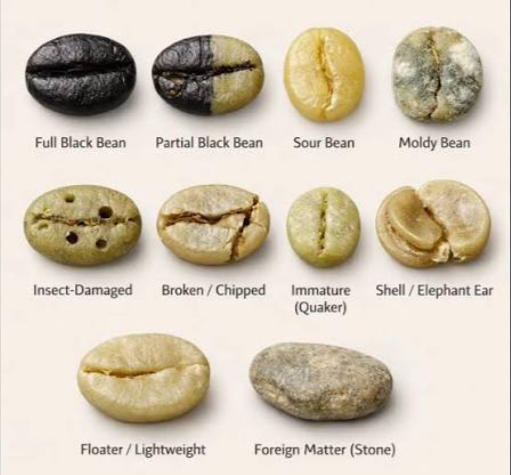
Black beans are a concern because they may affect the flavor of the brewed coffee, even when they represent only part of a green coffee lot.
Potential impact on flavor
The Food and Agriculture Organization of the United Nations (FAO) describes black beans as a serious green coffee defect and reports that they can produce a bitter, disagreeable beverage.
The precise sensory impact can vary with the cause and severity of the defect, as well as the amount present in the batch. Black beans should therefore not be assigned one universal flavor description. Their presence signals a potential risk that should be evaluated through appropriate quality checks.
Different roasting behavior
Black beans may also behave differently from sound beans during roasting. The ICO’s defect reference table notes that black beans roast slowly and that roasted black beans may appear yellowish.
This difference can contribute to variation in the appearance and development of beans within the same batch. However, the outcome is influenced by the specific defect and roasting conditions; the color of a roasted bean alone is not sufficient to identify the original defect.
Why removal and inspection matter
Removing black beans before roasting can reduce the risk of defect-related flavor problems. The required level of removal depends on the buyer’s quality standard and the intended use of the coffee.
For commercial sourcing, buyers should define acceptable defect limits and agree on the inspection method. A visual check is useful, but it should be combined with sample roasting and cup evaluation when sensory quality is critical.
3. How Broken Beans Affect the Roasting Process
Broken beans present a different challenge. Their main concern is physical damage and the possibility of uneven roasting.
Broken beans can roast differently
A broken bean may have a shorter heat-transfer distance or more exposed surface than an intact bean. It can therefore respond differently to the same roasting conditions.
FAO notes that broken beans can roast faster than whole beans and tend to become charred. The ICO also identifies uneven roasting as a potential effect of broken beans.
These references describe a risk, not a guaranteed outcome for every broken bean. Bean density, moisture content, the size of the broken piece, batch composition and roasting equipment can all influence the result.
Risk of uneven roast appearance
When broken beans are roasted alongside intact beans, the batch may contain pieces that develop at different rates. Some fragments may become darker or char more readily while other beans continue to develop.
This variation can make it more difficult for roasters to achieve a consistent roast appearance across the batch.
Potential effect on cup quality
The ICO indicates that broken beans may affect flavor slightly. The sensory impact depends on the degree of damage, the proportion of broken beans and the roasting conditions.
Broken beans should not automatically be treated as proof of poor cup quality. However, a high or inconsistent level of breakage can make the roasting process less predictable and should be assessed against the buyer’s specification.
4. Black Beans vs. Broken Beans: Key Differences
| Defect | Main concern | Potential roasting effect | Potential cup-quality impact |
|---|---|---|---|
| Black beans | Discoloration associated with defects in the bean | May roast differently from sound beans | Can contribute bitter or disagreeable flavors |
| Broken beans | Physical fracture or damage | May roast unevenly and can be more prone to charring | May affect flavor, depending on defect level and roasting conditions |
The two defects should be assessed separately. Black beans are particularly important for sensory risk, while broken beans are especially relevant to physical uniformity and roasting consistency.
5. Why Defect Levels Matter to Coffee Buyers
The presence of a defect does not automatically determine the quality of an entire shipment. Its significance depends on the type of defect, the quantity present and the buyer’s requirements.
For example, a buyer sourcing green coffee for a consistent commercial roast may place particular emphasis on physical uniformity and defect limits. A buyer developing a specific blend may also consider how the lot performs in sample roasting and in the final cup.
Defect evaluation should therefore be part of a broader quality assessment, alongside:
- Screen-size distribution
- Moisture content
- Physical appearance and uniformity
- Origin and processing method
- Sample roasting results
- Cup quality and sensory characteristics
No single physical parameter can replace a complete quality evaluation.
6. What Should Buyers Check Before Purchasing Green Coffee?
Define defect terminology
Buyers and suppliers should agree on what qualifies as a black bean, broken bean or bean fragment. Definitions can differ between grading systems, so the contract should identify the applicable standard or inspection method.
Specify acceptable limits
A purchase specification should state the acceptable defect level and how it will be measured. Buyers should avoid relying on vague terms such as “low defects” without a defined inspection basis.
Confirm the inspection method
The parties should agree on the sample size, counting or grading procedure, and the method used to determine whether the lot complies with the specification.
Request representative samples
A representative green coffee sample allows buyers to inspect physical defects before shipment. Sample roasting and cup evaluation can provide additional information about roasting behavior and sensory quality.
Assess the lot against its intended use
The required defect level may differ depending on whether the coffee is intended for a particular roast profile, blending, commercial production or another application. Buyers should evaluate defects in the context of the final product requirements.
7. How Green Coffee Defects Can Be Managed
Defect management begins before roasting.
At the processing stage, careful handling, appropriate equipment settings and effective sorting can help reduce physical damage and remove defective beans. During sourcing, clear specifications and consistent inspection procedures help buyers and suppliers evaluate lots against the same criteria.
At the roasting stage, sample roasting can reveal how a lot responds under the roaster’s conditions. Roasters can then decide whether additional sorting, profile adjustments or a different application is appropriate.
These measures reduce avoidable variation, but they do not guarantee that every bean will roast identically. Green coffee is an agricultural product, and quality depends on multiple factors across cultivation, processing, storage and roasting.
8. Green Coffee Sourcing from Nam Son
Nam Son supplies Vietnamese green coffee options for international buyers, importers, roasters and coffee manufacturers.
Available options include: Robusta & Arabica
For buyers evaluating green coffee, the relevant quality criteria should be confirmed against the product specification and the requirements of the intended application.
Nam Son can support sourcing discussions with product specifications, sample arrangements and export quotations based on buyer requirements.
Frequently Asked Questions
Do black beans always make roasted coffee taste bitter?
Not necessarily in every case. FAO identifies bitterness and disagreeable flavor as potential effects of black beans, but the actual sensory impact depends on the defect and its proportion in the coffee. Sample roasting and cup evaluation are important for assessing a specific lot.
Do broken beans always roast faster than whole beans?
No. FAO reports that broken beans can roast faster and tend to char, while the ICO identifies uneven roasting as a potential effect. Actual behavior depends on the size and condition of the broken pieces, the coffee’s physical properties and the roasting conditions.
Are black beans and broken beans the same defect?
No. Black beans are classified by discoloration, while broken beans are classified by physical damage. They present different quality risks and should be evaluated separately.
Can screen size replace defect inspection?
No. Screen size describes the physical size distribution of green coffee beans. It does not identify all defects or establish cup quality. Buyers should assess screen size alongside defect levels, moisture, physical condition and sensory results.
What is the best way to evaluate a green coffee lot?
Use a defined inspection method to assess the green beans, then conduct sample roasting and cup evaluation when required by the buyer’s quality criteria. The final assessment should be based on the complete specification rather than a single parameter.
