


 Tiếng Việt
News
WHY DO COFFEE BUYERS REQUIRE OVER 90% SCREEN SIZE UNIFORMITY IN GREEN COFFEE BEANS?

Nov
When purchasing green coffee beans, professional buyers do not evaluate quality based on appearance alone. One important technical specification they pay close attention to is screen size uniformity, often requiring more than 90% of the beans to fall within the agreed screen-size specification.
But why does this matter?
The answer lies in how bean size affects roasting consistency, heat transfer and the quality of the final coffee product.

1. What Does Screen Size Mean in Green Coffee?
Screen size refers to the physical size of green coffee beans, measured using standardized sieves with different aperture sizes.
In the coffee trade, screen numbers commonly represent sieve openings in units of 1/64 inch.
For example:
- Screen 18: approximately 7.14 mm
- Screen 16: approximately 6.35 mm
- Screen 14: approximately 5.56 mm
During screen analysis, green coffee beans are passed through a series of sieves to determine their size distribution.
A specification such as Screen 18: 90% minimum generally means that at least 90% of the sample meets the agreed screen-18 retention requirement, depending on the contract’s screening method and tolerance.
This does not necessarily mean every bean has exactly the same diameter. It means the size distribution is controlled within the agreed specification.
2. Why Do Buyers Require More Than 90% Uniformity?

A high percentage of beans within the specified screen range helps reduce size variation in the raw material.
This is particularly important for commercial roasting operations, where consistency between batches is essential.
More consistent bean sizes help achieve:
- More predictable heat absorption during roasting.
- More consistent roast development across the batch.
- Reduced variation between smaller and larger beans.
- Better control over roasting profiles.
- More consistent appearance and color in the roasted coffee.
Without adequate size control, a batch containing significantly different bean sizes may develop unevenly under the same roasting conditions.
3. How Does Bean Size Affect the Roasting Process?
During roasting, green coffee beans absorb heat and undergo a series of physical and chemical transformations.
Bean size is one of the factors influencing how heat moves through each bean.
Smaller beans: Under comparable conditions, smaller beans may heat through more quickly because of their shorter internal heat-transfer distance.
Larger beans: Larger beans may require more time for heat to penetrate toward the center, depending on density, moisture and roasting conditions.
When both sizes are roasted together using the same profile, differences in heat transfer can contribute to uneven roast development.
This may result in:
- Some beans reaching the desired roast level earlier.
- Larger beans potentially developing differently from smaller ones.
- Greater variation in roasted bean color.
- Less predictable flavor consistency across the batch.
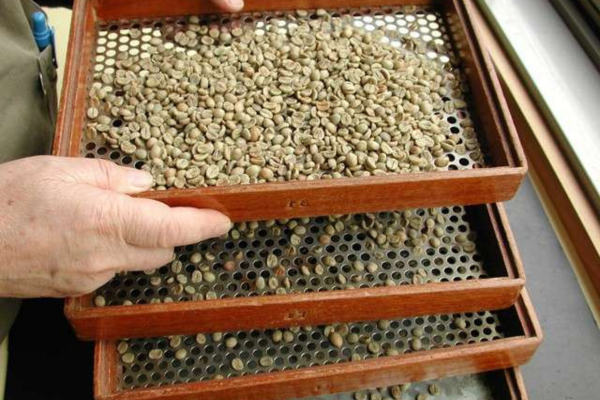
Screen-size uniformity helps reduce one source of variation, allowing roasters to develop more controlled and repeatable roasting profiles.
4. Why Is Screen Uniformity Important for Grinding and Extraction?
The benefits of consistent green coffee sizing continue beyond roasting.
When green beans are more uniform in size, roasters have better conditions for achieving consistent roast development. This can help produce a more predictable roasted coffee batch.
For grinding and extraction, however, it is important to understand that screen size does not directly determine ground particle size.
Grinding consistency also depends on:
- Grinder design and calibration.
- Roast level and bean brittleness.
- Bean density and moisture.
- Grinding settings and particle-size distribution.
Nevertheless, more consistent roasting can help reduce variations in the physical characteristics of roasted beans, supporting more predictable grinding and brewing results.
For commercial coffee production, this contributes to better process control and product consistency.
5. Why Is Screen Size Uniformity Important for Coffee Buyers?
For importers, roasters and coffee manufacturers, screen-size specifications are not merely technical numbers on a contract.
They help buyers control raw material consistency, production efficiency and product requirements.
A well-defined screen specification helps with:
- Raw material quality control.
- Roasting profile development.
- Batch-to-batch consistency.
- Product standardization.
- Supplier evaluation and shipment inspection.
However, screen size should never be used as the only indicator of green coffee quality. Buyers should also assess moisture content, defects, bean density, origin, processing method and cup quality.
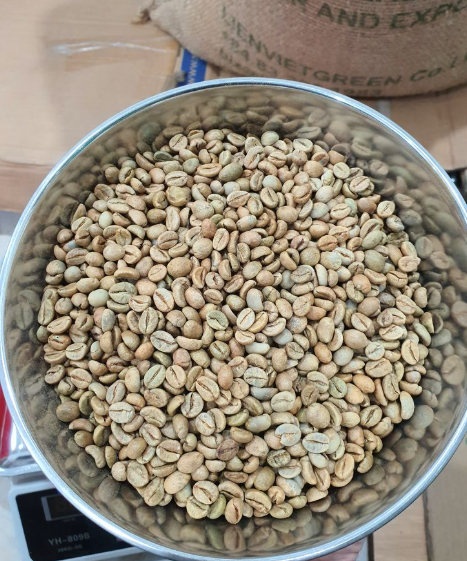
NAM SON – VIETNAMESE GREEN COFFEE SUPPLIER
At Nam Son, we understand the importance of consistent raw materials for international coffee buyers and roasting businesses.
We supply Vietnamese Robusta and Arabica green coffee beans with different screen-size options to meet buyer requirements.
Our available product options include:
Product specifications, screen-size distribution and quality requirements can be discussed according to each order.
📩 Contact Nam Son for green coffee specifications, samples and export quotations.
Nam Son – Vietnamese Agricultural Products Manufacturer & Exporter.
#GreenCoffeeBeans #CoffeeScreenSize #Screen18Coffee #GreenCoffeeSupplier #VietnamCoffee #RobustaCoffee #ArabicaCoffee #CoffeeRoasting #CoffeeQuality #CoffeeExporter -bản tiếng viêt
