


 Tiếng Việt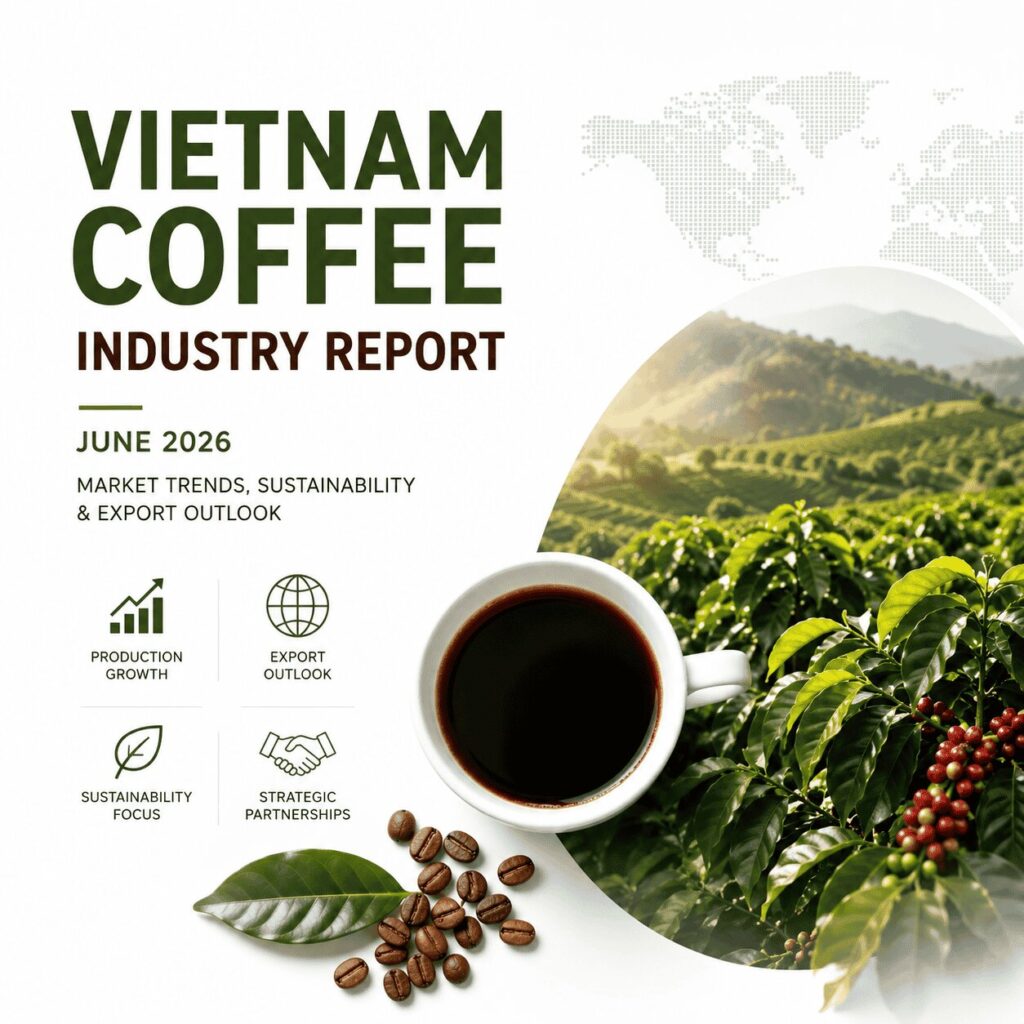
The Current State of the Vietnam Coffee Industry: June 2026 Market Update
Vietnam’s coffee industry continues to be a dynamic force in the global market, with June 2026 marking a period of significant shifts in production, sustainability practices, and export strategies. Driven by a combination of favorable weather, strategic investments, and evolving global demand, the sector is navigating both opportunities and challenges. This report provides an in-depth analysis of the current landscape, offering key insights for B2B buyers, investors, and industry stakeholders.
Executive Summary: Key Takeaways for June 2026
•Production Growth: Vietnam is poised for its third consecutive year of increased green coffee production, with forecasts reaching 32.5 million 60-kilogram bags for Marketing Year (MY) 2026/27 .
•Export Performance: Exports are projected to rise, supported by strategic stock releases and robust international demand .
•Market Dynamics: The market is experiencing a period of adjustment following recent historic highs, influenced by global supply shifts and increased domestic output .
•Quality and Sustainability Focus: The industry is increasingly prioritizing higher-quality beans and sustainable practices, with a significant portion of coffee areas holding international certifications .
•Climate Challenges: Despite growth, the industry faces ongoing risks from climate change, including irregular precipitation and the potential impact of El Niño conditions .
Production Forecast: A Third Year of Growth
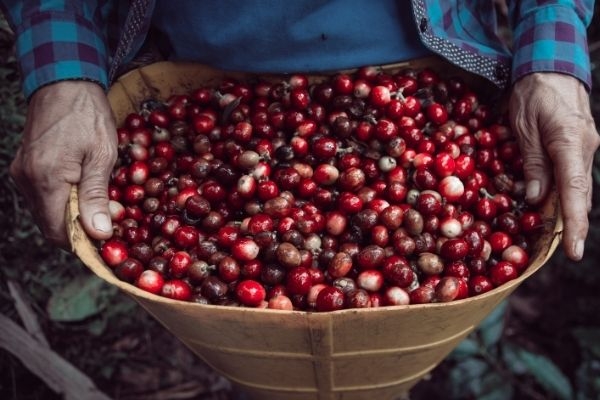
For Marketing Year 2026/27, Vietnam’s green coffee production is forecast to increase by 2.5% to an impressive 32.5 million 60-kilogram bags of green bean equivalent (GBE). This sustained growth, following 31.7 million bags in 2025/26 and 29 million bags in 2024/25, is primarily attributed to expanded robusta production, encouraged by strong market conditions in previous years .
The robusta segment is expected to lead this expansion, with a forecast rise of 3% to 31.4 million bags. In contrast, arabica production is projected to slightly decrease from 1.2 million to 1.1 million bags. The harvested area for robusta is also anticipated to grow by 2.2% to 644,000 hectares . The Vietnamese Ministry of Agriculture and Environment (MAE) estimates the total coffee area at approximately 730,000 hectares, with replanted and renewed areas from the 2021-2023 coffee replanting program now entering stable, high-yield productio.
Market Dynamics & Export Performance
Vietnam’s coffee exports are forecast to reach 28.95 million bags in 2026/27, a 1.6% increase from 28.5 million bags in 2025/26. Green coffee exports are expected to account for 25.4 million bags, while soluble and roasted exports will contribute 3.55 million bags . The country’s coffee export earnings reached an unprecedented USD 8.9 billion in 2025, highlighting its significant role in the global coffee trade .
The market is currently undergoing a notable correction, moving away from the historic peaks seen in late 2024 and early 2025. This downward trend is influenced by a global supply surplus, a record harvest in Brazil, and increased output from Vietnam itself . This shift in market dynamics is prompting exporters and buyers to reassess their strategies, focusing more on long-term partnerships and quality assurance rather than short-term price speculation.
Emerging Trends: Premiumization & Sustainability
Vietnam’s coffee industry is undergoing a strategic shift from a volume-focused exporter to one that emphasizes higher quality and traceability. Approximately 40% of the country’s coffee area now holds sustainability certifications such as Rainforest Alliance, Fairtrade, 4C, and UTZ .
Furthermore, the MAE and exporters are actively working towards compliance with European Union deforestation regulations (EUDR), a crucial step for maintaining access to key European markets . This focus on premiumization is also evident in the growing domestic consumption, driven by a rising middle class, tourism, and increasing demand for specialty coffee and modern brewing formats .
Challenges & Risks: Climate and Costs
Despite the positive outlook, the Vietnamese coffee industry faces several significant challenges. The Western Highlands Agriculture and Forestry Science Institute estimates that about 30% of the country’s coffee area consists of aging trees (20 years or older) that require replanting or renewal to sustain productivity and quality .
Rising input costs also pose a threat, with local farmers reporting a 30% increase in fertilizer and fuel costs, and a 33% rise in labor costs from the previous year . Weather patterns remain a critical concern. Precipitation in the Central Highlands coffee provinces was below normal from January to March 2026, and earlier U.S. climate forecasts indicate an elevated probability of El Niño conditions emerging in mid-2026 and persisting through the end of the year, which could impact future harvest.
Buyer’s Considerations: Strategic Sourcing in June 2026
For international buyers, June 2026 offers a dynamic market for Robusta coffee. The current market conditions, influenced by global supply dynamics, suggest a strategic period for engaging in forward contracts and securing long-term supply chains .
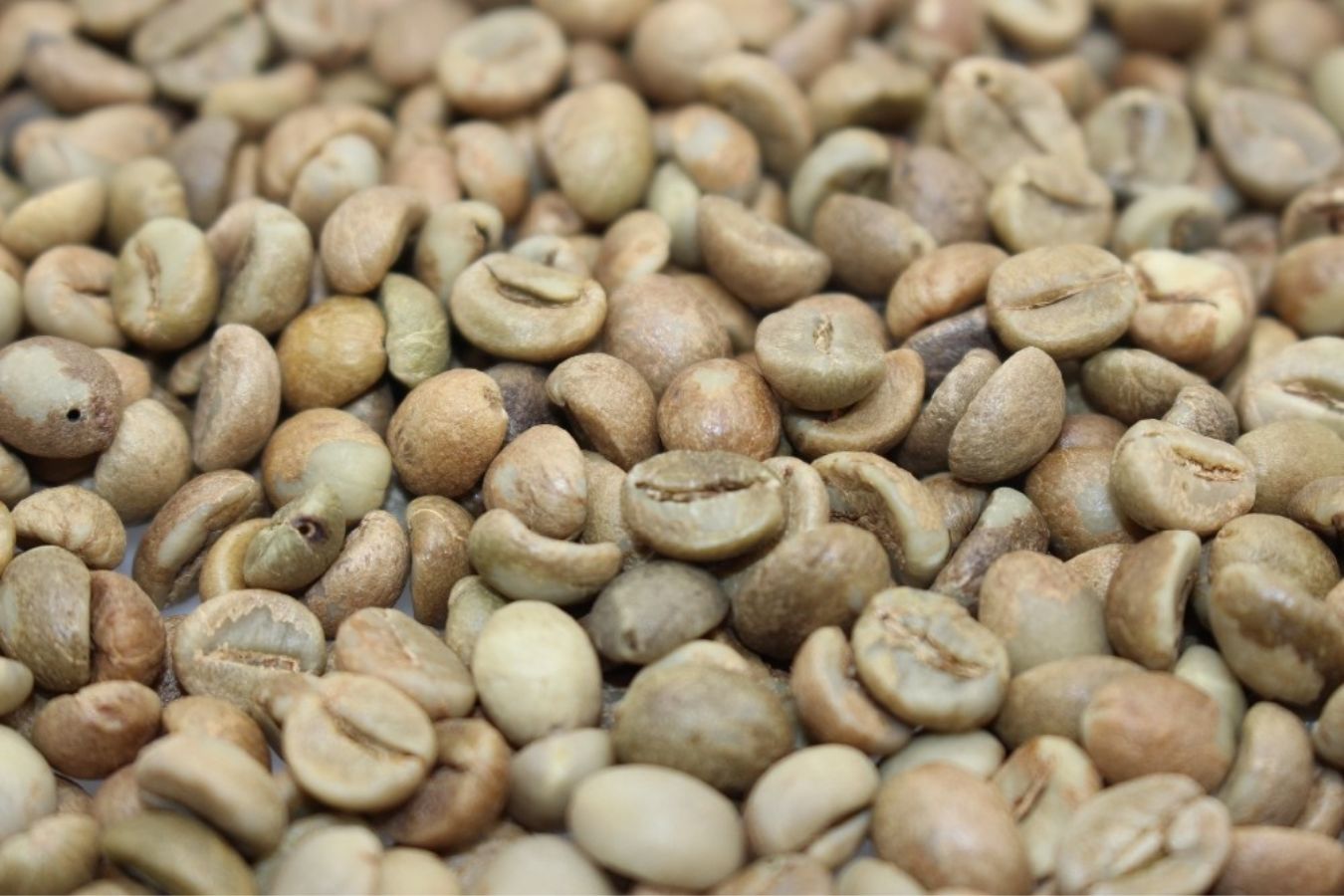
When sourcing from Vietnam, buyers should be aware of the available robusta grades, including Commercial Robusta (Grade 1–2, R1/R2) for espresso blends and instant coffee, Fine Robusta for specialty blends, and Anaerobic/Natural Robusta for premium segments. Key quality standards include TCVN 4193:2014 (Vietnam national green coffee standard) and ISO 10470 (International defect classification table). Compliance with EUDR, which requires GPS coordinates for growing plots for EU-bound shipments, is also becoming increasingly important .
Outlook for the Coming Months
Looking ahead, several factors will continue to shape the Vietnamese coffee market. The ongoing efforts to comply with EUDR will likely drive further improvements in traceability and sustainable practices. While global supply dynamics suggest a period of price moderation, potential weather anomalies, particularly the anticipated El Niño conditions, could introduce volatility. Buyers are advised to monitor climate forecasts closely and consider diversified sourcing strategies to mitigate risks. The focus on premiumization and value-added products is expected to intensify, offering new opportunities for partnerships in specialty coffee segments.
Conclusion
The Vietnamese coffee industry in June 2026 is characterized by robust production growth, evolving market dynamics, and a strong commitment to quality and sustainability. While facing challenges from climate change and rising costs, the sector’s resilience and strategic shifts position it for continued prominence in the global coffee landscape. For B2B stakeholders, understanding these trends is crucial for informed decision-making and successful engagement with this vital market.
Frequently Asked Questions (FAQ)
1.What is the production forecast for Vietnam’s coffee industry in 2026/27?
Vietnam’s green coffee production is forecast to increase by 2.5% to 32.5 million 60-kilogram bags for Marketing Year 2026/27, driven primarily by expanded robusta production .
2.How is climate change affecting coffee production in Vietnam in 2026?
Climate change is a significant concern, with below-normal precipitation in early 2026 and potential El Niño conditions later in the year posing risks to future harvests . Vietnam is also investing in addressing climate impact in coffee areas .
Climate change is a significant concern, with below-normal precipitation in early 2026 and potential El Niño conditions later in the year posing risks to future harvests . Vietnam is also investing in addressing climate impact in coffee areas .
3.Is Vietnamese coffee compliant with EUDR?
The Vietnamese coffee industry is actively working towards compliance with European Union deforestation regulations (EUDR), with the MAE and exporters focusing on meeting these standards . Vietnam is currently classified as low-risk by the EU regarding EUDR .
The Vietnamese coffee industry is actively working towards compliance with European Union deforestation regulations (EUDR), with the MAE and exporters focusing on meeting these standards . Vietnam is currently classified as low-risk by the EU regarding EUDR .
4.What should B2B buyers consider when sourcing Vietnamese coffee in June 2026?
Buyers should focus on strategic engagement in forward contracts, understanding available robusta grades, adhering to key quality standards like TCVN 4193:2014 and ISO 10470, and ensuring compliance with EUDR requirements .
Buyers should focus on strategic engagement in forward contracts, understanding available robusta grades, adhering to key quality standards like TCVN 4193:2014 and ISO 10470, and ensuring compliance with EUDR requirements .
5.What are the key trends for the Vietnamese coffee market in the coming months?
Key trends include continued efforts towards EUDR compliance, potential price volatility due to weather anomalies like El Niño, and an intensifying focus on premiumization and value-added products, especially in specialty coffee segments.
Key trends include continued efforts towards EUDR compliance, potential price volatility due to weather anomalies like El Niño, and an intensifying focus on premiumization and value-added products, especially in specialty coffee segments.
