


 Tiếng Việt
In the green coffee trade, the terms New Crop Coffee and Old Crop Coffee are commonly used to describe coffee from different harvest periods. Understanding the differences between them is important for importers, roasters, traders, and manufacturers when evaluating green coffee beans quality.
Fresh green coffee beans are often associated with a more recent harvest, while old crop coffee refers to beans harvested in an earlier season and stored for a longer period. However, the difference is not simply about freshness or age. Factors such as post-harvest processing, moisture content, storage conditions, and the physical and sensory characteristics of the beans all influence their quality.
One point that buyers should pay particular attention to is the aroma of new crop coffee. Some freshly processed lots may have a sharper, greener, or slightly pungent smell compared with older crop coffee. This does not automatically mean the coffee is defective, but it should be evaluated carefully.
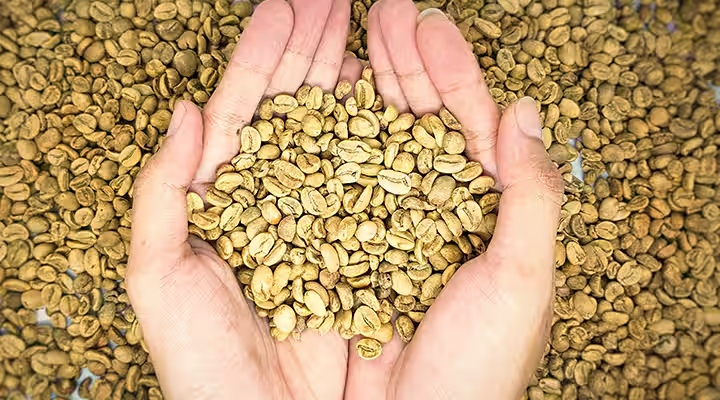
1. What Is New Crop Coffee?
New Crop Coffee, also known as Fresh Crop Coffee, refers to coffee harvested during the most recent harvest season.
In Vietnam, the harvest period varies depending on the growing region and coffee variety. Robusta and Arabica also have different harvest calendars.
After harvesting, coffee cherries undergo processing, drying, hulling, and sorting before being prepared as green coffee beans for export.
New crop coffee is generally valued for its recent harvest and the potential to retain desirable physical and sensory characteristics when properly processed and stored.
However, newly harvested coffee does not always have a fully settled aroma immediately after processing. Its sensory profile can vary depending on the processing method, drying conditions, moisture level, and the characteristics of the raw material.
2. What Is Old Crop Coffee?
Old Crop Coffee refers to green coffee beans harvested in a previous season and stored for a longer period before sale or use.
When stored under suitable conditions, old crop coffee can maintain acceptable quality for a considerable period. However, green coffee is not immune to changes during storage.
Over time, exposure to moisture, oxygen, heat, and unsuitable packaging can affect the beans’ physical and sensory properties.
Depending on storage conditions, old crop coffee may show changes in color, moisture distribution, aroma intensity, and cup profile.
For this reason, the age of the crop alone is not enough to determine whether a lot is good or bad. Buyers should evaluate the actual condition of the beans.
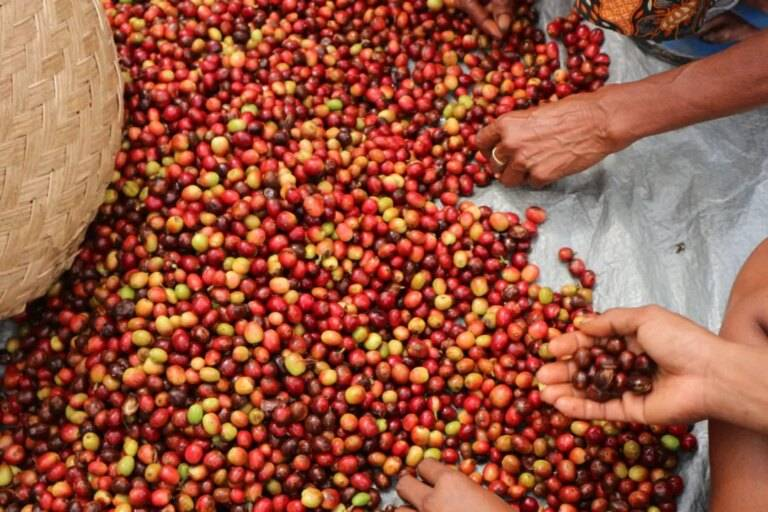
3. New Crop Coffee vs. Old Crop Coffee: Key Differences
| Evaluation Criteria | New Crop Coffee | Old Crop Coffee |
|---|---|---|
| Harvest period | Most recent harvest season | Previous harvest season or earlier |
| Aroma | May have a fresh, green, or sharper aroma depending on processing and conditioning | May have a more settled aroma, but can lose freshness during storage |
| Moisture condition | Depends on drying and post-harvest handling | May change during storage if conditions are unsuitable |
| Bean appearance | Often retains the appearance associated with a recent crop, depending on processing | May show changes in color or appearance over time |
| Cup quality | Depends on raw material, processing, and storage | May remain stable or deteriorate depending on storage conditions |
| Main consideration | Processing quality and post-processing condition | Storage history and preservation conditions |
Neither new crop nor old crop coffee is automatically superior. The actual quality of each lot depends on its origin, processing, handling, and storage history.
4. Why Does New Crop Coffee Sometimes Have a Sharper or Pungent Smell?
One characteristic that buyers sometimes notice when evaluating fresh green coffee beans is a sharp, green, or slightly pungent smell.
Some people describe this aroma as grassy, vegetal, raw, or stronger than the smell of coffee from an earlier crop. This can occur in certain newly processed lots, but it is not a universal characteristic of new crop coffee.
Several factors may contribute to this aroma.
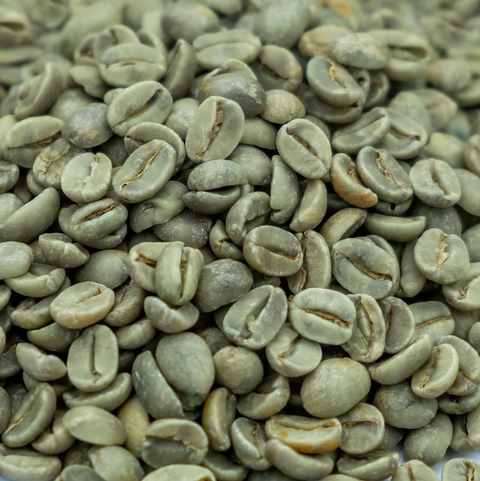
4.1. Post-Processing Conditioning
After drying and processing, green coffee beans may still undergo changes in their aroma profile.
A newly processed lot may not immediately present the same sensory characteristics as coffee that has been stored and conditioned for a longer period. As the beans stabilize under suitable storage conditions, some of the sharper notes may become less prominent.
However, this does not mean that every new crop lot needs a fixed resting period. The appropriate evaluation depends on the coffee’s actual condition and storage environment.
4.2. Fermentation During Processing
The fermentation stage plays an important role in developing the sensory characteristics of coffee, particularly in washed, natural, and other processed coffees.
If fermentation is not properly controlled, the beans may develop undesirable odors, including overly sour, fermented, or pungent notes.
The intensity and character of these odors depend on factors such as fermentation time, temperature, microbial activity, and the condition of the coffee cherries.
A strong smell should therefore be assessed carefully rather than automatically attributed to the freshness of the crop.
4.3. Drying Conditions and Moisture Content
Drying is another important factor affecting green coffee quality.
Uneven drying, insufficient drying, or exposure to moisture after drying can influence the stability and aroma of the beans.
Coffee with unsuitable moisture conditions may be more vulnerable to quality deterioration during storage. Therefore, buyers should check moisture content and ensure that the beans have been properly dried and protected from reabsorption of moisture.
4.4. Raw Material and Harvest Conditions
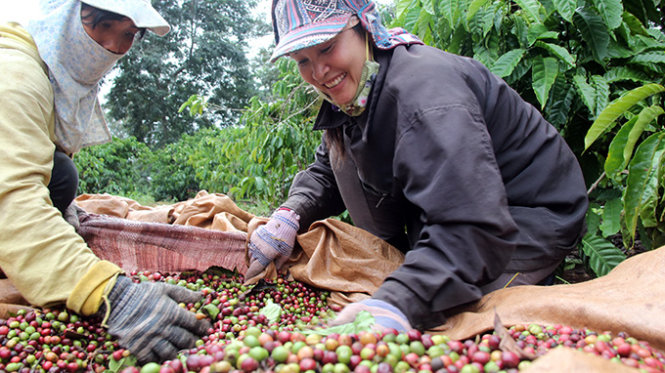
The quality of the harvested cherries also affects the final green coffee.
The proportion of ripe, underripe, and overripe cherries, together with harvesting and sorting practices, can influence the aroma and cup profile.
For example, a lot containing a relatively high proportion of underripe cherries may show more vegetal or grassy characteristics. These notes should be evaluated alongside the physical condition and cup quality of the coffee.
Important: A sharp or pungent smell is not automatically a sign of poor-quality coffee, but it should not be dismissed as a normal feature of every fresh crop either. Buyers need to identify the nature of the odor and determine whether it comes from the raw material, processing, drying, or storage.
5. How to Distinguish Different Odors in Green Coffee Beans
Not all unusual smells indicate the same quality issue. Buyers should identify the character of the aroma before making a decision.
| Aroma Description | Possible Indication | What Buyers Should Check |
|---|---|---|
| Green, grassy, or vegetal | May be associated with raw material characteristics or processing conditions | Bean maturity, processing method, and cup profile |
| Sharp or pungent | May relate to post-processing condition or fermentation | Fermentation history, drying, moisture, and sample condition |
| Sour or strongly fermented | May indicate uncontrolled or excessive fermentation | Processing records and cup evaluation |
| Hay-like or papery | May be associated with raw material or storage-related aroma changes | Storage conditions, packaging, and cup quality |
| Musty, moldy, or damp | May indicate moisture exposure or improper storage | Moisture content, visible mold, and storage history |
| Smoky or burnt | May be related to drying or exposure to smoke | Drying method and processing conditions |
These descriptions are indicative rather than definitive diagnoses. A smell should always be assessed together with physical inspection and, where appropriate, cup testing.
6. Does New Crop Coffee Need Time to Rest?
Not every new crop coffee lot requires additional resting time.
Some newly processed coffee may benefit from a period of suitable conditioning before its sensory characteristics are fully evaluated. During this time, the aroma profile may become more stable.
However, resting is not a solution for defects caused by poor fermentation, insufficient drying, mold, or unsuitable storage.
If a sample has a musty, moldy, damp, or strongly unpleasant odor, buyers should investigate the cause rather than assume that additional storage will correct the problem.
For commercial transactions, it is important to evaluate the coffee based on its current condition and the buyer’s intended application.
7. What Should B2B Buyers Check Before Purchasing Green Coffee Beans?
Whether sourcing Vietnamese Robusta or Vietnamese Arabica, buyers should evaluate more than the crop year.
The following points are important when assessing coffee for import, roasting, blending, or industrial production:
- Moisture Content: Check whether the moisture level meets the agreed product specification.
- Bean Size and Screen Distribution: Verify screen size requirements, such as S18, S16, or S13 for Robusta.
- Black and Broken Beans: Check the percentage of defective and broken beans against the agreed specification.
- Foreign Matter: Evaluate the level of stones, sticks, husks, and other foreign materials.
- Odor: Check for unusual green, fermented, musty, moldy, or smoky smells.
- Cup Quality: Conduct a cupping evaluation to assess aroma, flavor, acidity, body, and aftertaste.
- Storage and Packaging: Review how the coffee has been dried, packed, transported, and stored.
For large-volume purchases, buyers should request representative samples and confirm the specifications before placing an order.
8. Choosing the Right Crop for Your Business
The choice between new crop and old crop coffee depends on the buyer’s quality requirements, purchasing schedule, intended application, and market expectations.
New crop coffee may be suitable for buyers who prioritize recent harvests and want to source coffee from the latest crop season.
Old crop coffee may also be a suitable option when it has been properly stored and continues to meet the buyer’s physical and sensory requirements.
Ultimately, crop age should not be the only factor used to determine coffee quality. Processing, moisture control, storage, and sample evaluation are equally important.
Conclusion
New crop and old crop coffee have different harvest and storage histories, but neither category guarantees a particular level of quality.
Some fresh green coffee beans may have a sharper, greener, or slightly pungent aroma after processing. This can be related to conditioning, fermentation, drying, moisture, or raw material characteristics. Buyers should distinguish these aromas from signs of defects such as mold, dampness, or uncontrolled fermentation.
For importers, roasters, and coffee traders, the most reliable approach is to evaluate each lot through agreed specifications, physical inspection, aroma assessment, and cup testing.
Nam Son Co., Ltd supplies Vietnamese green coffee beans, including Robusta and Arabica, with export specifications tailored to different buyer requirements.
Contact Nam Son for product specifications, samples, and quotations for your green coffee sourcing needs.
