


 Tiếng Việt
In green coffee trading, screen size is an important physical specification used to classify Robusta coffee beans and define purchasing requirements. However, its significance extends beyond appearance. Bean size distribution can influence roast uniformity, while its relationship with density, moisture content and bean structure helps roasters determine the appropriate roasting profile.
For coffee importers, roasters and green coffee buyers, understanding the differences between S18, S16 and S13 Robusta is useful when evaluating specifications, comparing suppliers and planning production.
1. What Is Screen Size in Robusta Coffee?
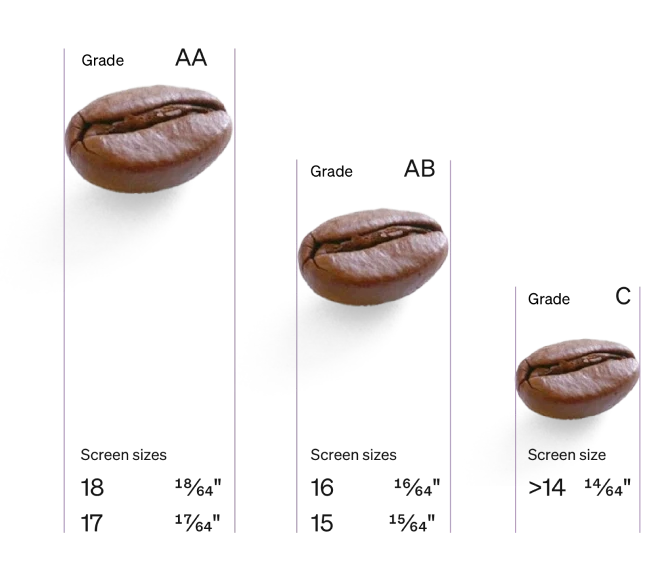
Screen size refers to the physical dimensions of green coffee beans, determined by passing them through calibrated sieves with standardized openings. In the conventional grading system, screen numbers correspond to hole diameters expressed in increments of 1/64 inch. Screen 18, for example, represents an opening of approximately 7.14 mm.
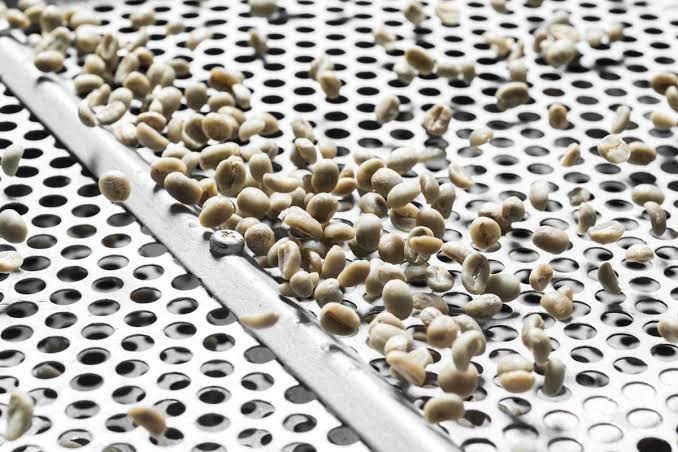
For Vietnamese Robusta, common commercial screen specifications include:
- S18: Larger beans, typically retained on the Screen 18 sieve.
- S16: Medium-sized beans, typically retained on the Screen 16 sieve.
- S13: Smaller beans, typically retained on the Screen 13 sieve.
These designations indicate size classification, not a complete quality grade. Actual contracts should specify the required screen distribution and permitted tolerance, because a commercial lot may contain beans distributed across several screen sizes.
Screen analysis is one component of green coffee specification. Other relevant parameters include moisture content, defects, density, origin, processing method and sensory characteristics. ISO 9116:2025 provides guidance on describing green coffee for sale and purchase, including specification and sampling procedures. Source: ISO 9116:2025
2. How Screen Size Influences Robusta Roasting
2.1 Heat Transfer and Roast Development
During roasting, heat moves from the roasting environment to the bean surface and then into the bean interior through a combination of heat-transfer mechanisms. The rate of roast development depends on several interacting variables, including bean dimensions, density, moisture, initial temperature, heat input, airflow and roasting-machine design.
Larger beans have a greater distance between the surface and the center, all else being equal. This can affect the temperature gradient between the exterior and interior during roasting.
Smaller beans have a shorter characteristic distance for heat to travel toward the center. Under otherwise comparable conditions, they may respond differently to the same roasting profile.
However, screen size alone cannot determine the correct charge temperature, total roast time or development time. A dense S16 lot may behave differently from a less-dense S18 lot. Roasters should evaluate the physical characteristics of each lot and validate adjustments through roast trials.
2.2 Roast Uniformity and Screen Distribution
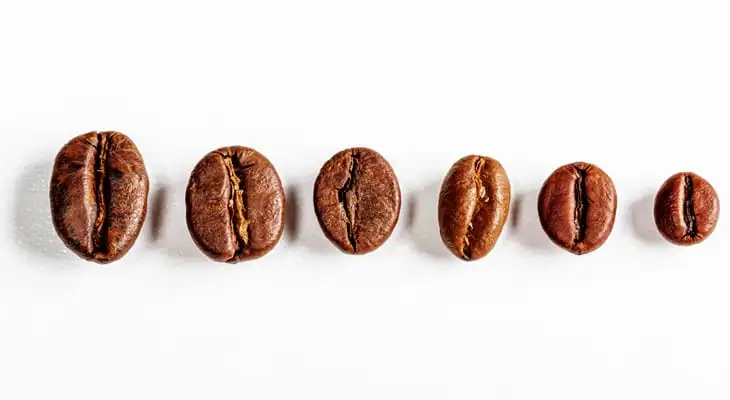
Uniformity matters when a batch contains beans of substantially different dimensions. Smaller and larger beans may develop at different rates under the same thermal conditions, potentially producing variation in roast color and internal development.
A well-controlled screen distribution can help reduce one source of variability. It does not eliminate variation caused by differences in density, moisture, defects or bean structure.
For commercial Robusta roasting, buyers and roasters should distinguish between:
- Dominant screen size: The screen category that represents the principal portion of the lot.
- Screen distribution: The percentage of beans retained on each sieve.
- Size uniformity: How tightly the beans cluster around the contracted specification.
A lot described as S18 should therefore be assessed against its actual screen distribution and contractual tolerance rather than judged by the label alone.
2.3 Roast Color and Development
Roast color is influenced by thermal exposure and the chemical reactions that occur during roasting. Differences in bean size and physical structure can contribute to variation in color development within a batch.
If the roasting profile is not suitable for the lot, some beans may develop more rapidly than others. This can complicate color consistency and sensory evaluation.
Roasters should compare instrumental roast-color measurements, weight loss, roast curves and representative cupping results when evaluating whether a profile is suitable for a particular Robusta specification.
3. S18 vs. S16 vs. S13: Practical Considerations for Roasters
| Specification | Physical characteristic | Roasting consideration |
|---|---|---|
| S18 Robusta | Larger bean size | Monitor internal development alongside surface color; do not assume that a higher charge temperature or longer roast is automatically required. |
| S16 Robusta | Intermediate bean size | Establish a baseline profile using measured moisture, density and roast-test results. |
| S13 Robusta | Smaller bean size | Monitor the rate of temperature rise and roast development; avoid applying a profile designed for another lot without validation. |
These are practical considerations, not fixed roasting rules. The actual response of each lot depends on its physical and chemical properties and the roasting system.
For example, a roaster comparing S18 and S13 from the same origin should not automatically apply a longer roast to S18 or a shorter roast to S13. Instead, both lots should be evaluated under controlled conditions, with adjustments made according to observed roast behavior and cup results.
4. Why Bean Density and Moisture Matter Alongside Screen Size
Screen size describes bean dimensions, whereas density provides additional information about the mass of coffee relative to its volume. These measurements are related in some lots but are not interchangeable.
Density and internal bean structure can influence heat transfer and roast development. Moisture content also affects the energy required to heat and dry the beans during roasting.
When evaluating Vietnamese Robusta, roasters should consider the following parameters together:
- Screen size and distribution: To understand physical size and uniformity.
- Bulk density: To provide additional information about the physical characteristics of the lot.
- Moisture content: To assess the lot’s condition and account for differences during roast development.
- Defect count and visual inspection: To identify physical defects and potential quality concerns.
- Roast trials and cupping: To validate roast performance and sensory quality.
ISO 4150 covers manual and mechanical sieve analysis for green coffee, while ISO 6669 addresses the determination of free-flow bulk density of whole green and roasted coffee beans. These methods address different physical properties and should not be treated as substitutes for one another. ISO standards reference
5. Does Larger Robusta Bean Size Mean Better Coffee Quality?
No. Larger beans do not automatically produce better flavor, aroma or body.
Screen size is a physical grading parameter. Cup quality also depends on variety, growing conditions, harvesting, post-harvest processing, storage, defects and roasting.
A well-processed S16 or S13 Robusta lot may perform better in the cup than a larger-screen lot with poor processing or excessive defects. Similarly, a uniform screen distribution can support consistent roasting, but it cannot guarantee a superior sensory result.
For buyers, the most reliable approach is to assess screen size alongside the complete product specification and, where appropriate, representative samples and cupping results.
6. What Should Buyers Specify When Purchasing Vietnamese Robusta?
For B2B transactions, a clear purchase specification helps align expectations between exporter, importer and roaster. Buyers should consider defining:
- Screen size: S18, S16, S13 or another agreed specification.
- Screen tolerance: Permitted distribution above and below the target screen.
- Moisture content: The agreed limit for the shipment.
- Defect and foreign-matter limits: Based on the buyer’s quality requirements.
- Processing method: For example, clean or wet-polished Robusta where applicable.
- Origin and crop information: To support product identification and traceability.
- Sample approval: Representative green coffee samples and, when needed, roast and cup evaluation before shipment.
The appropriate specification depends on the buyer’s application, roasting equipment and target product. A screen-size designation should form part of a broader quality-control framework rather than serve as the sole acceptance criterion.
7. Sourcing Vietnamese Robusta from Nam Son
Nam Son supplies Vietnamese green coffee for international B2B buyers, including Robusta in different screen-size specifications such as S18, S16 and S13, subject to product availability and agreed requirements.
For importers, traders and roasters, we can provide product specifications, samples and quotations for evaluation against purchasing requirements.
When comparing Robusta offers, buyers should assess the complete specification—including screen distribution, moisture, defects, processing method and sample performance—to select coffee that fits their production needs.
Looking for Vietnamese Robusta in your required screen size? Contact Nam Son to discuss specifications, samples and export supply options.
