


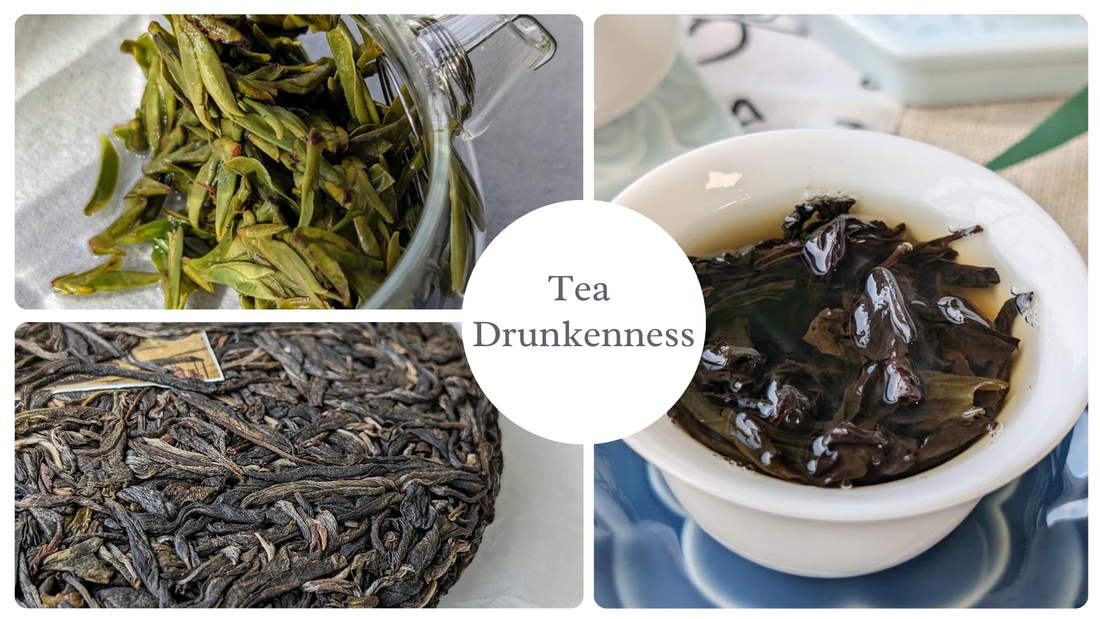
If you are new to gongfu brewing and high-quality teas, you may not be aware, but drinking too much tea in a short timeframe can lead to a unique physiological state, which tea lovers refer to as tea drunkenness.
Despite the name, you won’t actually be drunk as alcohol-induced. Being tea drunk can be both pleasant and slightly unsettling, and you may experience a range of symptoms and emotions. So, what exactly is it?
What is Tea Drunkenness?

Tea drunkenness (茶醉, cha zui in Chinese) is a complex set of physical and mental sensations caused by over-consuming tea, particularly tea that is high in caffeine and L-theanine, and brewed with a high quantity of tea leaves in proportion to water.
The experience is very subjective and varies from person to person. Positive common symptoms include: calm alertness, body warmth, mental clarity and focus, and giddy euphoria. However, it can also cause lightheadedness, dizziness, mild nausea, stomach discomfort, and jitteriness.
Why Does It Happen?
Tea drunkenness is caused primarily by tea compounds and how they interact with your body and your mind. In particular:
- Caffeine: It increases alertness and focus, and it can also raise adrenaline levels. It may cause side effects such as anxiety, insomnia, headaches, or irritability.
- L-Theanine: This amino acid promotes relaxation and reduces anxiety. It balances caffeine side effects, creating a sense of “alert calmness.”
- Polyphenols & Antioxidants: These compounds can sometimes cause mild irritation or nausea, contributing to the physical sensations of being “drunk”, especially when drinking tea on a completely empty stomach.
When you consume a large amount of these compounds quickly, as you could in a Gongfu tea session, they hit your system all at once, creating the tea drunk sensation.
Tea That Gets You Tea Drunk

While any tea can cause it if consumed in large enough quantities, some teas are particularly well-known for causing tea drunkenness. Young raw pu-erh and heavily oxidized oolongs, like Wuyi Rock and Dan Cong, are among the culprits.
Moreover, Matcha and certain high-elevation or early-harvest green teas are likewise more likely to trigger tea drunkenness due to their high concentration of caffeine and amino acids.
So, if you want to know how to get tea drunk, the above types of teas are the way to go. Instead, if you want to avoid tea drunkenness, make sure to drink the above teas in moderation and follow the advice in the next section.
How to Avoid the Unpleasant Side of Tea Drunkenness
Some tea drinkers actively seek out the experience of tea drunkenness. Still, if you’d prefer to avoid it, here are some tips you should know:
- Never Drink on an Empty Stomach: Have a small snack, such as nuts, fruit, or a biscuit, before you start or during your tea session. This helps slow down the absorption of tea compounds, preventing any unwanted sensation.
- Drink Water: A glass of water can help mitigate stomach discomfort by diluting gastric acids promoted by tea compounds.
- Listen to Your Body: Pay attention to how you’re feeling and your sensations. If you start to feel spacey or jittery during a tea session, it’s better to take a break.
- Skip the First Steeps: If you’re very sensitive to caffeine, but you still want to join a tea session with friends, then simply skip the first 2 servings. As caffeine is water-soluble, this ensures that a large portion of caffeine is washed out.

What to Do If You Become Tea Drunk
If the sensations you’re experiencing are pleasant, you should enjoy them. But if you feel unwell and nauseous, you can regain control and feel better easily:
- Eat Something: This is the fastest and most effective remedy. Reach for something substantial and preferably sugary or starchy. A piece of chocolate, a banana, dates, or a biscuit can help mitigate the effects quickly.
- Hydrate with Water: Drink a glass of water. According to traditional Chinese medicine, hot water is even better.
- Get Some Fresh Air: If you’re feeling dizzy, step outside or sit by an open window. Slow, deep breaths can help cope with the feeling.
- Stay Calm: The effects are temporary. Acknowledge the feeling without worry. It typically reduces within 30 to 60 minutes.