

 Tiếng Việt
For international buyers, sourcing coffee, black pepper, cashew kernels, tea and other agricultural products involves more than evaluating price and product quality. Food safety management, certification status, laboratory testing and export documentation are essential considerations when selecting a reliable supplier.
Requirements vary according to the product, country of origin, destination market, intended use and buyer specifications. Understanding these requirements before placing an order helps importers reduce compliance risks, prepare shipments more efficiently and establish reliable supply relationships.
At Nam Son Co., Ltd. – NS Group, we support international buyers sourcing Vietnamese agricultural products by coordinating product specifications, relevant compliance information and export documentation according to agreed requirements.
1. Food Safety Management Systems
Food safety management systems help businesses identify hazards, implement preventive controls and maintain consistent processes throughout production and handling. International buyers commonly evaluate suppliers against recognized food safety frameworks.
HACCP
Hazard Analysis and Critical Control Points (HACCP) is a systematic approach to identifying, evaluating and controlling significant food safety hazards.
For agricultural products, HACCP-based controls may address risks associated with raw material handling, processing, storage, cross-contamination and packaging. Buyers should assess whether the supplier’s HACCP system covers the relevant product and processing operations.
ISO 22000
ISO 22000 specifies requirements for a food safety management system for organizations throughout the food chain. It combines food safety management principles with hazard control and communication across the supply chain.
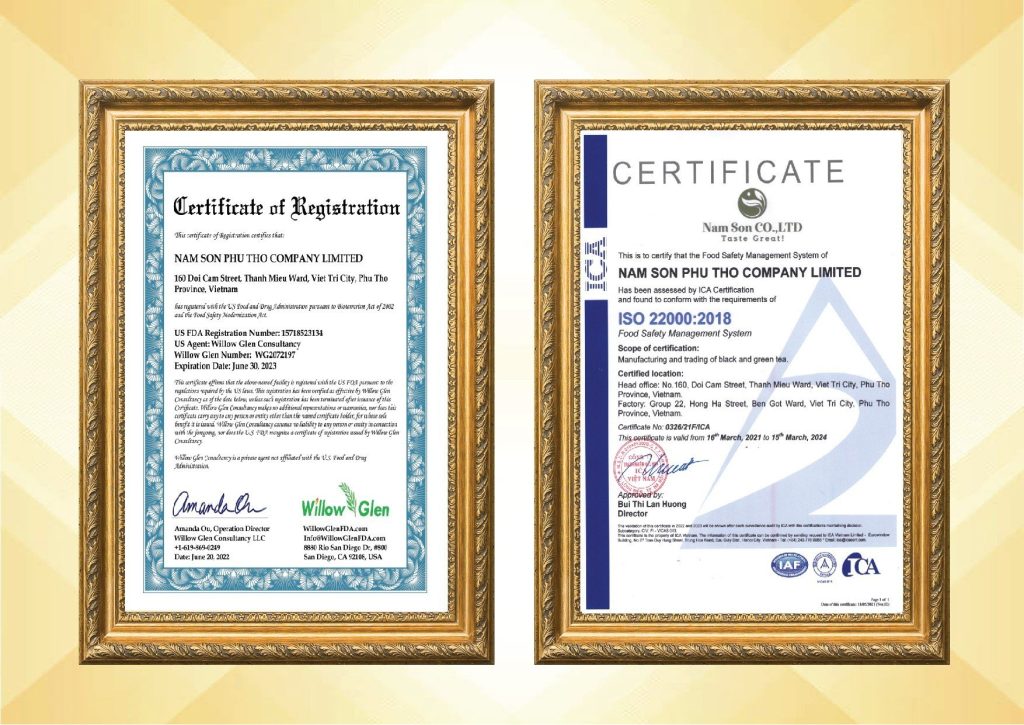
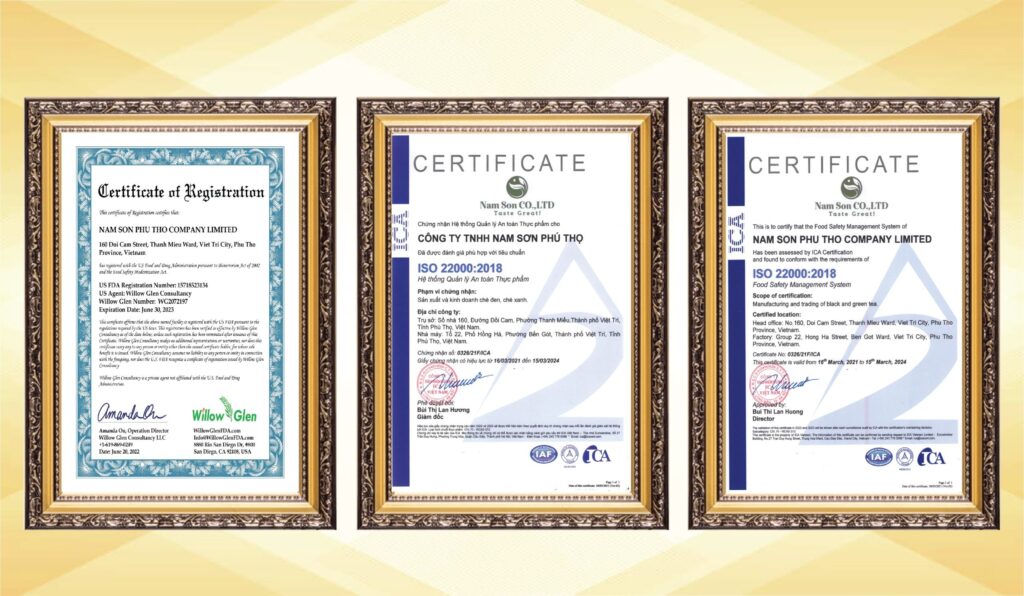
For importers and food manufacturers, a valid ISO 22000 certificate can provide evidence that a supplier’s food safety management system has been assessed against the standard within a defined scope.
BRCGS and FSSC 22000
BRCGS Food Safety and FSSC 22000 are additional food safety certification schemes that may be requested by retailers, manufacturers and international sourcing organizations.
Their relevance depends on the supplier’s activities, product category, facility scope and the buyer’s approval requirements. Importers should verify the applicable scheme, certification scope, issuing body and validity rather than relying on a certification name alone.
2. Market Access and Customer-Specific Requirements
Some requirements relate to legal market access, while others are voluntary certifications or conditions established by customers. These categories should be evaluated separately.
FDA Registration for the US Market

Facilities that manufacture, process, pack or hold food for consumption in the United States may be required to register with the US Food and Drug Administration (FDA), subject to applicable exemptions.
FDA facility registration is not the same as FDA product approval, and registration alone does not establish that a product complies with every US food safety requirement. Importers should also review applicable prior notice, food safety, labeling and import requirements.
Halal and Kosher
Halal and Kosher certification may be required by buyers serving specific consumer groups, retail channels or markets.
The applicable certification depends on the product, processing environment, ingredients, handling procedures and the certifying organization accepted by the buyer or destination market. Importers should confirm certification scope and recognition before shipment.
Organic and Rainforest Alliance
Organic certification and Rainforest Alliance certification apply to specific production, sourcing and chain-of-custody requirements. They are not interchangeable with general food safety certification.
Buyers seeking certified products should confirm that the relevant product, producer, facility or supply chain is covered by the applicable certification and that the documentation supports any intended product claims.
3. Laboratory Testing and Quality Documents
Certificates alone do not replace product-specific testing or agreed quality specifications. Depending on the product and destination market, buyers may request the following documents and analyses.
- Certificate of Analysis (COA): Reports specified analytical results for a product or batch.
- Pesticide residue analysis: Evaluates relevant pesticide residues against applicable destination-market limits and buyer requirements.
- Microbiological testing: Assesses specified microorganisms where relevant to the product, processing method and intended use.
- Heavy metal analysis: May be required for particular products or markets.
- Physical quality inspection: May cover moisture, foreign matter, defects, size distribution, appearance and other contract parameters.
Testing should be performed using appropriate methods, with acceptance criteria agreed before production or shipment. Where required, buyers may specify accredited laboratories, sampling procedures and batch identification.
For example, green coffee specifications may include moisture content, screen size, defect count and sensory characteristics. Black pepper specifications may address moisture, density, foreign matter, microbiological criteria and pesticide residues. Cashew kernel specifications may include grade, moisture, defects, color and microbiological requirements.
The exact parameters and limits should be established according to the product specification, applicable regulations and sales contract.
4. Export Documentation and Phytosanitary Requirements
International agricultural shipments may require several documents to support customs clearance, product traceability and compliance.
Common documents include:
- Commercial invoice and packing list
- Bill of lading or other transport document
- Certificate of Origin, where applicable
- Phytosanitary certificate, where required for the commodity and destination
- Certificate of Analysis and inspection reports, where requested
- Health or other official certificates, where required by the applicable regulations
A phytosanitary certificate is generally associated with plant health requirements for regulated plants and plant products. It should not be assumed that every processed agricultural food product requires one.
The required documents depend on the commodity’s classification, processing status, origin, destination and import rules. Buyers and exporters should confirm the requirements with the relevant authorities and logistics partners before shipment.
5. What International Buyers Should Verify Before Placing an Order
A structured supplier evaluation helps prevent misunderstandings and documentation gaps.
Before confirming a purchase, buyers should:
- Define the product specification. Agree on grade, quality parameters, packaging, tolerances and intended application.
- Identify destination-market requirements. Confirm mandatory regulations and any additional customer or retailer requirements.
- Review certification documents. Check the certificate holder, issuing organization, scope, validity and relevant production site.
- Agree on testing and acceptance criteria. Specify the required analyses, methods, limits and sampling arrangements.
- Confirm export documentation. Establish which documents are required, who issues them and when they must be available.
- Maintain batch traceability. Ensure product identification and supporting records are consistent across the relevant documents.
These steps help align supplier capabilities with buyer expectations before goods are dispatched.
6. Sourcing Vietnamese Agricultural Products with Nam Son
Nam Son Co., Ltd. – NS Group supplies Vietnamese-origin agricultural products to international B2B buyers, including importers, distributors, manufacturers and food businesses.
Our product portfolio includes:
- Coffee: Vietnamese Robusta and Arabica
- Tea: Green tea, black tea and other tea varieties
- Spices: Black pepper, cinnamon and star anise
- Cashew kernels: Including commercial grades according to agreed specifications
- Other agricultural products: Subject to product availability and buyer requirements
We work with buyers to clarify technical specifications, review relevant certification and documentation requirements, arrange representative samples where available, and prepare export quotations based on the requested product and delivery terms.
Certification and documentation availability should be confirmed for each product, facility and shipment. Requirements are assessed according to the destination market and the agreed scope of supply.
Frequently Asked Questions
Are food safety certificates mandatory for every agricultural export?
No. Mandatory requirements depend on the product, destination market and applicable regulations. Some certificates are required by law, while others are requested by customers, retailers or voluntary certification programs.
Does FDA registration mean a product is FDA-approved?
No. FDA facility registration is distinct from product approval. Importers must assess the applicable US requirements for the specific food product and shipment.
Is a Certificate of Analysis required for every shipment?
Not universally. A COA may be required by the buyer, contract or applicable regulation. Its scope should match the product and agreed testing requirements.
Does every agricultural product require a phytosanitary certificate?
No. The requirement depends on the commodity, its processing status and the destination country’s plant health rules. The applicable import requirements should be confirmed before shipment.
How can buyers confirm whether a supplier’s certificate is relevant?
Review the certificate holder, facility or site, product or process scope, issuing organization, validity period and any applicable verification mechanism. A certificate should not be assumed to cover every product supplied by the same company.
Partner with Nam Son for Vietnamese Agricultural Exports
Selecting an export supplier requires a clear understanding of product quality, food safety, certification scope and destination-market compliance.
Nam Son works with international buyers to align Vietnamese agricultural products with agreed specifications and sourcing requirements, supporting a more transparent and organized procurement process.
Contact Nam Son for product specifications, relevant certification information, samples and B2B export quotations.
Website: https://nam-son.com/
Email: [email protected]">[email protected]
Phone: +84 24 3787 5738 | +84 904 549 449
