


 Tiếng Việt
How does drinking tea help lower blood fat?
Drinking tea helps lower blood fat because tea contains a large amount of powerful antioxidants, such as catechins and polyphenols.
These substances have the potential to lower triglyceride and LDL (bad) cholesterol levels in the blood, as well as increase HDL (good) cholesterol levels through various biological mechanisms, including:
- Reduced lipid absorption: According to research , the antioxidants in tea can reduce the body’s ability to absorb fat by increasing bile acids and cholesterol in the stool after just 8 weeks of consumption, thereby reducing the amount of fat absorbed into the bloodstream and liver after meals.
- Improving liver function: The liver plays a crucial role in regulating cholesterol levels in the body. The polyphenol compounds in tea have been shown to inhibit genes that synthesize fat in the liver, while also enhancing fat oxidation in the liver, thereby helping the body effectively eliminate blood fat.
- Reducing inflammation: Inflammation is a risk factor for cardiovascular disease and high cholesterol. The antioxidants in tea help reduce inflammation in the body, thereby lowering the risk of inflammatory problems related to high cholesterol, such as inflammation of the blood vessel walls (which can lead to heart attack or stroke) and arthritis.
Note :
While drinking tea may help lower blood lipid levels, it cannot replace a healthy diet and a balanced lifestyle. To effectively manage blood lipid levels, you should combine tea consumption with a balanced diet, regular exercise, maintaining a healthy weight, and taking medication as prescribed by your doctor (if any).
List of 23 types of tea that are good for lowering blood fat currently available.
Below is a list of 23 popular teas that can effectively help lower blood fat levels, as recommended by many nutrition experts:
1. Green tea
Green tea tops the list of herbal teas that lower blood lipids because it contains many catechins – a group of antioxidants that can inhibit enzymes involved in lipid synthesis in the liver and reduce cholesterol absorption in the intestines, thereby improving blood lipid profile.
Furthermore, the antioxidants in green tea also promote cardiovascular health by protecting cells from attack by free radicals; thereby, supporting anti-inflammation and preventing the formation of blood clots that can block blood vessels.
According to research , consuming more than two cups (460ml) of green tea per day can reduce total serum cholesterol levels, contributing to a 22-33% reduction in the risk of death from cardiovascular disease.

Green tea helps limit fat absorption in the intestines and reduces fat synthesis in the liver.
2. Black tea
Similar to green tea, black tea is also one of the popular types of tea for lowering blood fat , favored by many people.
Studies show that the antioxidant compounds polyphenols found in black tea may help lower blood cholesterol levels by affecting lipid metabolism in the liver and enhancing cholesterol elimination through excretion (feces).
Therefore, drinking black tea can help reduce total cholesterol, LDL cholesterol, and increase HDL cholesterol (good cholesterol); thereby effectively supporting the prevention of cardiovascular complications.
3. Oolong Tea
Animal studies have shown that consuming Oolong tea at a level of 400 mg/kg body weight/day for 8 weeks can inhibit the excessive fat metabolism pathway in the body by reducing the activity of SREBP-1, FAS, and ACC. Specifically:
- SREBP-1: A key transcription factor that regulates genes promoting fat production;
- FAS and ACC: Two important enzymes that promote the synthesis of fatty acids and phospholipids in the liver.
On the other hand, consuming Oolong tea also enhances the expression of CPT-1a – an enzyme that allows fatty acids to enter the mitochondria to be metabolized into energy by cells, thereby helping to reduce blood lipids.
4. Blackthorn Tea
Celastrus hindsii is a plant species belonging to the genus Celastrus . Plants in this genus, including Celastrus hindsii, often contain a specific compound called celastrol .
According to research , celastrol may support the reduction of blood lipids by regulating metabolic processes related to fats in the gut and liver, including synthesis, catabolism, absorption, transport, and oxidation of fats. In mice treated with celatrols, lipid metabolism also showed a significant increase.
This suggests that consuming extracts from the leaves of the blackthorn plant (blackthorn tea) may also contribute to regulating blood lipids through the aforementioned pathways.
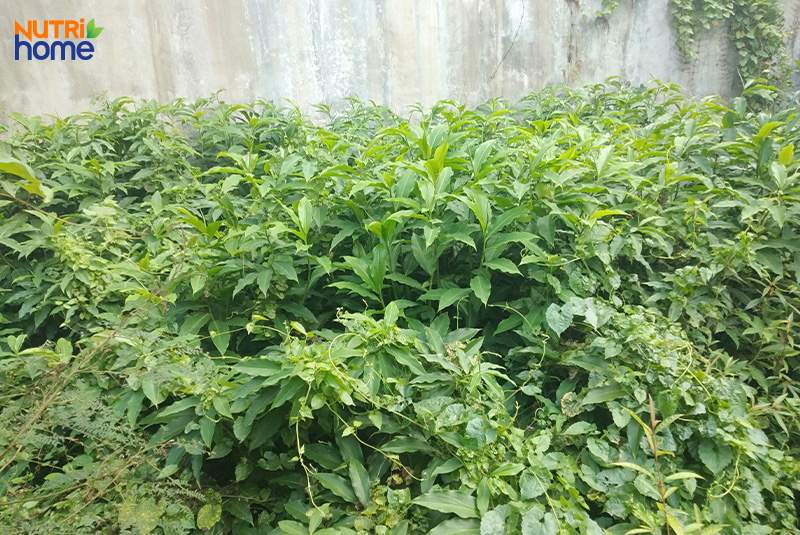
Illustrative image of a blackthorn bush in its natural environment.
5. Lotus leaf tea lowers blood fat.
Studies show that lotus leaf tea is an effective blood lipid-lowering tea because it contains a high amount of nuciferine – a compound that can inhibit fat formation by controlling the activity of FAS (fatty acid synthase) – an enzyme responsible for catalyzing fat synthesis in the liver.
In fact, the water extract of lotus leaves (lotus leaf tea), when taken orally at a dose of 6.6 g/day for 40 days, can significantly reduce total cholesterol, triglycerides, and LDL (bad) cholesterol levels in the serum.
On the other hand, lotus leaf tea has also been reported to improve insulin sensitivity and reduce inflammation, thereby helping to control weight and prevent early complications of diabetes and cardiovascular disease in people with high cholesterol.
6. Artichoke tea
Artichoke tea contains many important antioxidants such as caffeoylquinic acid (cynarin, chlorogenic acid, etc.), flavonoids (luteolin and glucoside derivatives) and bitter substances (sesquiterpene lactone, cynaropicrin).
Thanks to its high antioxidant content, similar to green tea, artichoke tea has also been shown to be a safe way to lower blood lipid levels by inhibiting HMG CoA reductase – an enzyme that promotes cholesterol synthesis in the liver.
Therefore, adding artichoke tea to your diet helps reduce the synthesis of new cholesterol in the body and effectively supports the treatment of hyperlipidemia.
7. Reishi Mushroom Tea
Reishi tea contains many polysaccharides, a type of complex starch that has been shown to significantly reduce blood cholesterol and triglyceride levels by enhancing the activity of antioxidant enzymes such as GSH-Px and SOD in the liver; thereby reducing oxidative stress and improving the liver’s fat metabolism.
On the other hand, the triterpenoid antioxidants found in reishi tea can also regulate the gut microbiome and inhibit genes that promote lipid and cholesterol synthesis in the liver.
Therefore, reishi tea can also be considered an ideal blood lipid-lowering tea , recommended by many experts as a dietary supplement for people with high blood cholesterol.
8. Guava leaf tea
Similar to reishi mushroom tea, many studies have shown that amniotic sac leaves also contain many polysaccharide compounds, which have antioxidant activity and significantly reduce total cholesterol and triglyceride levels in the blood.
Therefore, using guava leaf tea as a blood fat-lowering tea is the ideal answer when you are wondering what kind of tea to drink to effectively reduce blood fat .
9. Coptis tea lowers blood fat.
Coptis chinensis tea may be an ideal choice when you’re unsure what tea to drink to lower blood fat .
Studies show that the compound berberine in Coptis tea helps activate AMPK – an enzyme that plays a role in activating the absorption and oxidation of glucose and fatty acids when cellular energy is low.
Activating AMPK helps reduce cholesterol and triglyceride synthesis, enhances fatty acid oxidation, and decreases VLDL cholesterol production, thereby supporting the reduction of blood lipid levels.
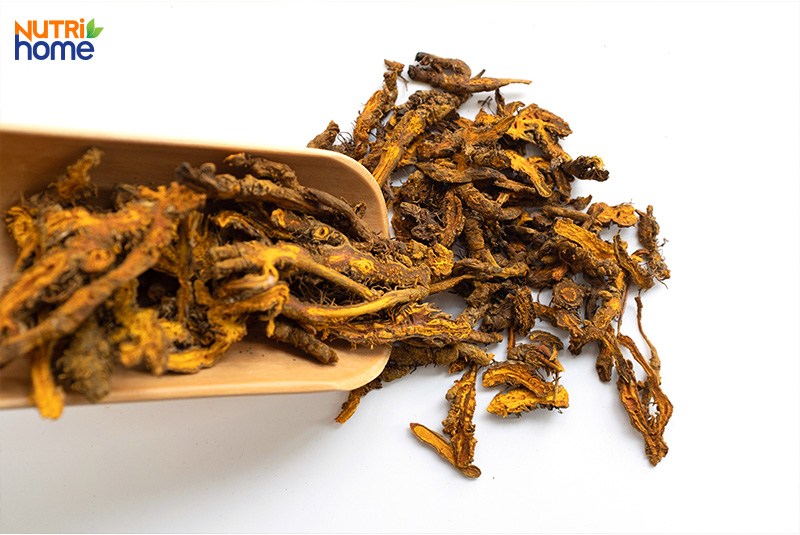
Coptis tea contains the active ingredient berberine, which is beneficial for people with high cholesterol.
10. Drinking ginger tea can lower blood fat.
Ginger tea can be considered an effective way to lower blood fat levels because it contains many antioxidant compounds called gingerol.
Similar to Coptis chinensis, gingerol also has the ability to help lower blood lipids by enhancing the activity of the AMPK enzyme.
Furthermore, gingerol activates PGC-1α, a key co-activator that regulates genes involved in fatty acid oxidation in mitochondria, thereby supporting liver cells in efficiently metabolizing fats and reducing blood lipids.
According to research , supplementing with ginger tea at doses less than 2g/day showed a greater effect in reducing triglycerides and high blood cholesterol than even doses above 2g/day. Therefore, you should consider supplementing with ginger tea in moderation to optimize its effectiveness in regulating blood lipids.
11. Perilla tea
Shiso tea is rich in alpha-linolenic acid (ALA). Studies show that ALA can lower triglyceride and cholesterol levels in the blood by inhibiting the activity of enzymes involved in lipid synthesis, such as fatty acid synthase (FAS) in the liver. This helps reduce the synthesis of triglycerides and cholesterol in the body, leading to lower blood lipids.
12. Houttuynia cordata tea
It can be said that Houttuynia cordata tea is a type of tea that lowers blood lipids, possessing most of the specific biochemical mechanisms of Coptis chinensis tea, ginger tea, and Perilla tea in supporting blood lipid regulation.
According to research , Houttuynia cordata tea is rich in antioxidant flavonoids and polysaccharides. Supplementing with Houttuynia cordata tea helps activate AMPK – an enzyme that plays a role in increasing the body’s need for fat – and inhibits the activity of FAS (fatty acid synthase) – an enzyme that promotes fat synthesis in the liver.
13. Chamomile tea
Chamomile tea contains many antioxidant compounds belonging to the flavone group, including apigenin, quercetin, patuletin, luteolin, α-bisabolol, etc. Flavones have been studied for their ability to lower blood cholesterol by inhibiting the synthesis of LDL (bad) cholesterol in the liver.
However, please consult your doctor before using chamomile tea to lower blood cholesterol as it has blood-thinning properties. This is especially important for those who are about to give birth, undergoing surgery, or taking blood-thinning or clotting medications prescribed by their doctor.

Chamomile tea helps to limit the synthesis of cholesterol in the liver.
14. Phyllanthus tea
Phyllanthus niruri tea helps reduce blood lipids primarily through its antioxidant activity, inhibition of fatty acid synthesis, and improvement of lipid metabolism in the liver.
According to research, the presence of ellagic acid in Phyllanthus niruri leaves can stimulate the AMPK metabolic pathway, helping cells metabolize and utilize fats more efficiently, thereby supporting the reduction of blood lipids.
According to the study, Phyllanthus niruri tea also helps to enhance the activity of lecithin cholesterol acyltransferase – an enzyme that plays a role in promoting the transport of excess cholesterol from peripheral tissues to the liver for excretion.
Therefore, you can use Phyllanthus niruri tea as a blood fat-lowering tea due to its properties that help the body eliminate cholesterol through the excretory system.
15. Dandelion Tea
Dandelion tea is an effective blood lipid-lowering tea due to its high content of L-chicoric acid, a powerful antioxidant that enhances liver function and thus improves blood lipid levels.
On the other hand, similar to Phyllanthus niruri tea, dandelion leaf extract has also been shown to stimulate the AMPK metabolic pathway in liver and muscle cells.
Once activated, AMPK stimulates glucose uptake and lipid oxidation to produce energy, while simultaneously “shutting down” energy-consuming processes (including lipid production) to restore the body’s energy balance; thereby supporting blood lipid regulation.
16. Peppermint Tea
According to research, peppermint tea can lower blood cholesterol by stimulating the liver to increase bile production – a substance that can break down fats from food into free fatty acids that the body can easily absorb. Bile contains cholesterol, so increased bile production can help the body use cholesterol more efficiently, thereby supporting blood cholesterol regulation.

Peppermint tea may help lower cholesterol by supporting the body’s production of bile.
17. Jasmine tea
Jasmine tea, especially jasmine green tea, helps lower blood lipids through mechanisms related to antioxidant activity and its influence on lipid metabolism in the liver.
The main compounds that contribute to the lipid-regulating effects of jasmine tea are epicatechins, particularly epicatechin gallate (EGC) and epigallocatechin gallate (EGCG).
Studies show that epicatechin supplementation also increases the excretion of fatty acids, triglycerides, and acid sterols in the feces. This suggests that green jasmine tea may support the reduction of blood lipids by eliminating the absorption of fats and cholesterol from the diet.

Jasmine tea helps the body limit the absorption and eliminate cholesterol effectively.
18. Syzygium jambolanum tea (Tea made from the leaves and flowers of the Syzygium jambolan
Voi leaf tea is also considered an effective blood lipid-lowering tea , recognized by modern medicine. Research shows that the antioxidant and blood lipid-lowering effects of voi leaf tea inhibit the activity of pancreatic lipase. In the human body, pancreatic lipase is normally secreted by the pancreas to participate in the hydrolysis and digestion of fats in the duodenum.
Therefore, consuming tea made from the leaves of the Vối plant helps the body limit the absorption of fat from the diet and increase its excretion through feces.
19. Lotus heart tea
Lotus seed tea contains many antioxidant compounds belonging to the alkaloid group. Studies show that alkaloids synthesized from lotus seeds help improve blood lipid composition by activating the AMPK metabolic pathway, helping cells utilize and “burn” fat more effectively; thereby supporting the improvement of hyperlipidemia.
20. Rose Leaf Tea
Dried and powdered persimmon leaves contain high levels of phenolic antioxidants and fiber. Specifically, 100g of persimmon leaf powder can contain up to 1.15g of phenolics and 63.48g of fiber.
Studies have shown that the simultaneous presence of these two nutrients is the main reason why rose leaf tea can reduce total cholesterol, LDL cholesterol, and triglycerides in the blood.
21. Bitter gourd tea
Bitter gourd (Momordica charantia) possesses both cucurbitane and oleanane-type triterpenoids, which have strong antioxidant properties.
Therefore, bitter melon supplementation has been shown to promote lipid metabolism in mitochondria, helping to reduce fat accumulation in the body; thereby supporting the reduction of cholesterol and triglyceride levels in the blood.
22. Basil Tea
Basil tea is a blood fat-lowering tea recommended by many experts. Thanks to its high content of antioxidant compounds belonging to the phenolics and flavonoids groups, consuming basil tea has been shown to reduce total cholesterol, LDL cholesterol (bad cholesterol), and triglycerides in the blood.
23. Garlic Tea
Garlic contains a high concentration of an antioxidant compound called allicin. Studies have shown that supplementing with allicin at a dose of 5 mg/kg body weight/day reduced triglycerides and LDL cholesterol in the blood by 75.94% and 57.92%, respectively.
This suggests that consuming garlic tea may also contribute to regulating blood lipids through the bioactivity of allicin in the body.

Garlic tea helps regulate blood lipids because it contains many allicin compounds.
Notes on drinking fat-lowering tea at home
When drinking cholesterol-lowering tea at home, the most important thing is to follow the instructions of your doctor or nutritionist to avoid side effects or drug interactions (if any).
In addition, maintaining a healthy diet, such as limiting alcohol, sugary drinks, and saturated fats, along with a healthy lifestyle, is also essential to keeping blood lipid levels within a safe range.
Finally, you should also regularly check your blood lipid levels and have regular check-ups to make timely lifestyle adjustments or switch to a different type of fat-lowering tea (if needed).
The above information provides useful insights on the topic of tea for lowering blood fat . Hopefully, through this article, you have gained a clear understanding of what kind of tea to drink to reduce blood fat , as well as the biological mechanisms behind the successful reduction of blood fat by which teas work.
Remember that while fat-lowering tea can contribute to a healthy lifestyle, it should not replace a balanced diet, regular exercise, or prescription medication to control high blood lipids. Patients should always consult their doctor before making any significant changes to their diet or treatment plan.
