

 Tiếng Việt
As any tea lover knows, the comfort of a steaming hot cup of tea is just about unbeatable when the shivering starts and the snow begins to fall. But, did you know that some hot teas might make you feel colder? According to Traditional Chinese Medicine, some blends have cooling properties that lower your internal temperature, even if the tea is boiling hot. In this tradition, it has nothing to do with the temperature, but instead, it’s the nature of the tea that determines if it creates warmth in your body.
Still a bit of a head-scratcher? We’ve rounded up some information on the nature of tea in Traditional Chinese Medicine and compiled some warming blends you can shop in our online store!
The 5 Natures Of Food
In Traditional Chinese Medicine (TCM), food is divided into five natures: cold, cool, neutral, warm and hot. This is based on the concept of siqi, or “four energies,” which also correlates with the seasons—cold/winter, cool/autumn, warm/spring, and hot/summer. In this line of thinking, the warming or cooling nature of food is not determined by its actual temperature, but rather by what effects it has on our body after consumption. Cool/cold foods will decrease warmth/heat in the body, and vice versa. Neutral foods are considered balanced and won’t alter the body’s internal temperature.
TCM is based heavily on the concept of yin and yang. It is the balance of these energies that creates harmony, health, and wellbeing, and this optimal balance can be achieved by paying attention to what you consume.
Warming Teas To Beat The Winter Chill
Just like foods, different teas have different natures; this allows you to personalize your tea routine to support yin-yang balance based on what your body needs. Green tea, for example, is cooling. Shortly after you have a cup of hot tea, the heat begins to fade quickly and it will soon generate cool energy internally, allowing your body to cool off. This is great in the spring and summer but in the bitter cold of winter? Not so much.
Since we’r heading into a period of deep cold, let’s take a look at the true warming teas. One quick tip to help you figure out which type of tea is warming is to look at its colour. For example, teas that have undergone fermentation, oxidation or roasting will be warmer in nature.
Our lineup of warming tea includes black teas, oolong teas, pu-erh and chai. And while green tea is generally seen as a cooling tea, it can be blended with warming spices such as ginger, cinnamon, cardamom, fennel, spearmint, jasmine and pepper to create a more neutral effect while providing other health benefits. With that, here are a few toasty teas from our collection that will keep you cozy to your core when you need it most!
Organic Golden Pu-erh
This pu-erh tea from China’s Yunnan Province is aged for five years and is unlike anything else in our collection. This ageing process, combined with an environment of relatively high humidity, mellows the elemental character of the tea when compared to young Pu-erh (aged about one year). As with wine, young pu-erh is considered the least valuable whereas pu-erh aged for five years or longer is more highly prized. Interestingly, the taste of pu-erh becomes more mellow with age. Pu’erh tea has been used for thousands of years in China to aid digestion and boost metabolism. And when the weather is raging outside, a cup of our Organic Golden Pu-erh is perfect for keeping your internal system warm and well-balanced.

Creamy Oolong
This extraordinarily smooth and creamy oolong tea will have you coming back for more. Our Creamy oolong is the successor of premium Oolong from China and the Milk Oolong. As the warming nature of the tea generates heat internally and keeps you warm, its caffeine will keep you energized as you go about your day. The oolong tea in our Creamy Oolong is sourced from the Wuyi Mountains of China. Wuyi teas are grown wild all over the mountains, rather than in a tea garden. This makes the tea taste a bit deeper and richer compared to the lighter, greener, or stone fruit flavours of other types of oolong teas. What can we say? This is pure comfort in a cup.

Sweet Chai
A delicious, complex, warming chai blend. Chai is usually brewed very strong, often concentrated, with lots of sugar and milk. Traditional Indian chai combines rich black tea that is boiled in milk with local spices such as cinnamon, clove, cardamom, and occasionally black peppercorns, ginger, and red chillies. The drink is then sweetened with sugar and diluted with water to then be consumed throughout the day. Our Sweet Chai is naturally sweetened with vanilla beans and natural vanilla flavour, so you can skip the milk or sugar but don’t have to compromise on the warm, decadent taste.

Irish Breakfast
A cup of breakfast black tea is a great way to kick-start your day, but it is also a no-brainer in keeping you warm from inside out thanks to the special oxidation process. Our Irish Breakfast brews up nutty, fruity and bold, with hints of dark honey— and a robust taste that you will enjoy when the weather is coldest. Note: The longer this tea steeps, the stronger it becomes. Keep your favourite milk or creamer on hand as they can help reduce the characteristic bitterness and balance out the strong flavour to leave you with a satisfying cup.

Jasmine China Green
Jasmine is, without a doubt, one of the world’s greatest teas. According to TCM, jasmine belongs to the “yang” food group, which helps balance out the “yin” of green tea beautifully. The flowers and tea are then “mated” in machines that control temperature and humidity. It takes four hours or so for the tea to absorb the fragrance and flavour of the Jasmine blossoms, and for the highest grades, this process may be repeated as many as seven times. Our Jasmine China Green has a balanced and delicate flavour and makes for a nice cup at any time of day, but especially after a heavy meal to help aid with digestion.

Great news for herbal tea fans! There are a variety of options when it comes to warming herbal teas. Any warming herbs, spices, roots, bark, flowers, and leaves can be steeped in hot water to make a nourishing, caffeine-free winter brew. According to TCM, herbs and spices that taste bold, spicy, and create a hot or tingly sensation in your mouth are going to create more warmth in your body. To combat the winter chill, opt for these warming herbal teas:
Christmas Rooibos
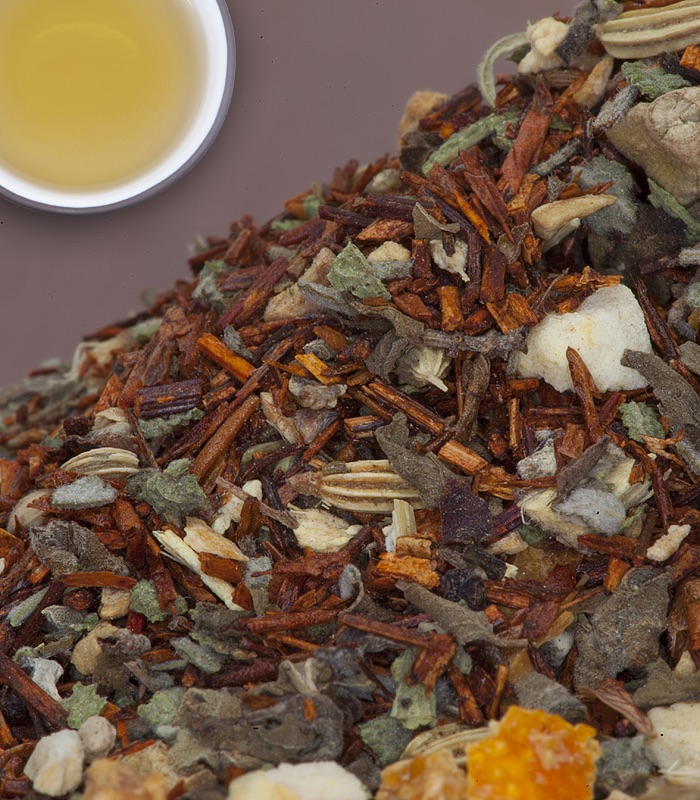
Don’t miss this ultimate holiday rooibos! Flavours like Rooibos, apple cubes, cinnamon, cloves, anise, coriander, ginger, pepper, cardamom, rose petals and almonds come together and make this Christmas loose leaf tea a superb blend to cozy up with. But this tea isn’t restricted to only Christmas Eve or Christmas Day. It’s satisfying sweet and spicy flavours make this the perfect warming tea to get through the winter with.

Sunshine Tea
Made for wet, cold, snowy days. Cozy up indoors with a cup of our Sunshine Tea— a herbal blend of lemon balm, blackberry leaves, rosehips, orange peels, hibiscus, chamomile, linden flowers and ginger. This caffeine-free tea is a sweet way to top off a meal and is packed with tons of amazing health perks. Squeeze a few drops of lemon and add a spoon of honey for a decidedly addictive cup that will warm you up and brighten those gloomy winter days.

Kapha Balance
Dried ginger is considered hot in nature, while fresh ginger is warm, both make for a nice, flavourful and truly warming cup. From alleviating stomach pain and indigestion to reducing inflammation and feelings of nausea, ginger tea is a must in any tea drinker’s arsenal. Another bonus to ginger tea? The warm spiciness can naturally open up your nasal passages to mitigate the effects of the common cold.
Our Kapha Balance is a step up from your regular ginger tea, as it includes a powerful blend of Rooibos, fennel, organic ginger, holy basil (Tulsi), and cardamom. This rich, spicy and robust tea is sure to keep you cozy, wake up your senses and help you combat fatigue during the coldest months of winter.