

 Tiếng Việt
There are few things as soothing as a hot cup of tea, especially before bed. Some types can help you relax, slow down, and unwind after a long day.
Many types of herbal tea have been used as natural sleep remedies for centuries, thanks to their ability to fight insomnia, stress, and anxiety. Some have even been studied for their sleep-promoting properties.
This article explores 6 of the best bedtime teas for catching some Zzz’s.

Made from the dried bark, buds, and stems of the magnolia plant, magnolia tea is often used as a natural sleep aid in many forms of traditional medicine.
The plant contains honokiol and magnolol, two compounds that have sedative effects
Although research in humans is lacking, some older animal studies have found both honokiol and magnolol to help induce sleep and decrease insomnia
According to one study in women who recently gave birth, drinking magnolia tea for 3 weeks significantly improved depression and sleep quality, compared with a control group
Still, more recent research is needed to better evaluate how magnolia tea may affect sleep in humans.

Green tea is a popular type of tea known for its distinct flavor and health benefits
Interestingly, some studies suggest that it could also improve sleep quality and battle insomnia.
For example, one small study of 20 adults found that drinking low caffeine green tea was linked to improved sleep quality, decreased stress, and reduced fatigue, compared with drinking regular green tea
Other research suggests that epigallocatechin-3-O-gallate (EGCG), which is found in green tea, may be to thank for green tea’s sedative effect
Be sure to choose green tea with low or no caffeine content if you’re planning to drink it close to bedtime.

Chamomile tea is a type of herbal tea with a delicate floral flavor and possible health benefits.
It’s made from chamomile, a plant that’s often used to promote sleep thanks to its sedative effects
In a review of 12 studies, chamomile was found to safely improve sleep quality, though it didn’t significantly affect insomnia
Another study investigated how drinking chamomile tea affected 80 women who had recently given birth and who experienced poor sleep quality
Within 2 weeks, they reported fewer sleep difficulty-related symptoms, compared with a control group. However, after 4 weeks, there was no difference in symptoms between the group that drank tea and the control group
However, because research is still limited, more studies are needed to understand how chamomile tea may affect sleep.

Lavender tea is made by brewing the buds of the lavender flower in water, creating a vibrant purple beverage with a distinct flavor and aroma.
Not only is it often enjoyed as a soothing bedtime tea, but some research also supports that lavender could promote relaxation and enhance sleep quality.
For instance, one small study found that women who had recently given birth and who drank 1 cup (237 mL) of lavender tea per day for 2 weeks experienced less fatigue than a control group
One study in older adults showed that lavender tea effectively decreased symptoms of depression and anxiety, both of which could contribute to insomnia
Some studies also show that lavender essential oil could reduce anxiety and improve sleep, though it’s unclear if these findings apply to lavender tea (
Ultimately, more research is still needed.

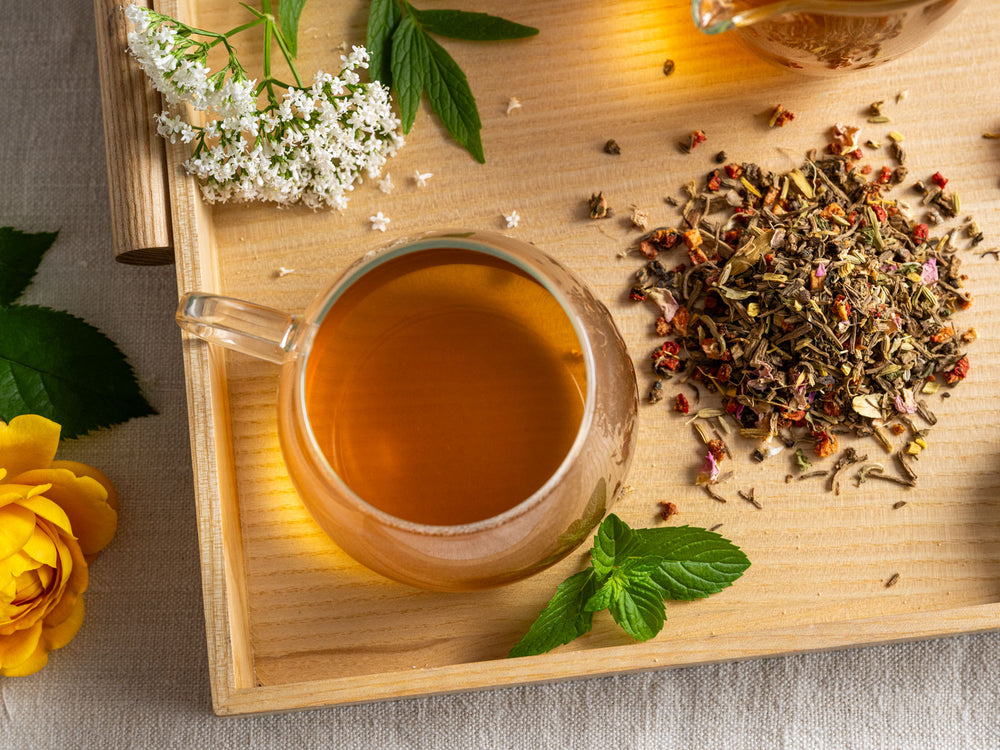
Valerian is a type of flowering plant used as an herb or supplement.
The dried roots of the plant are used to make valerian tea, which is sometimes used as a natural sleep aid
While it’s unclear how valerian root works, it’s thought to boost levels of a neurotransmitter called gamma-aminobutyric acid (GABA), which reduces anxiety
Although a few studies show that valerian root can help treat anxiety, improve sleep quality, and enhance feelings of relaxation and calmness, specific research on the effects of valerian tea is limited
Therefore, while some people might find that valerian tea works for them, additional studies are needed to better understand its effects.
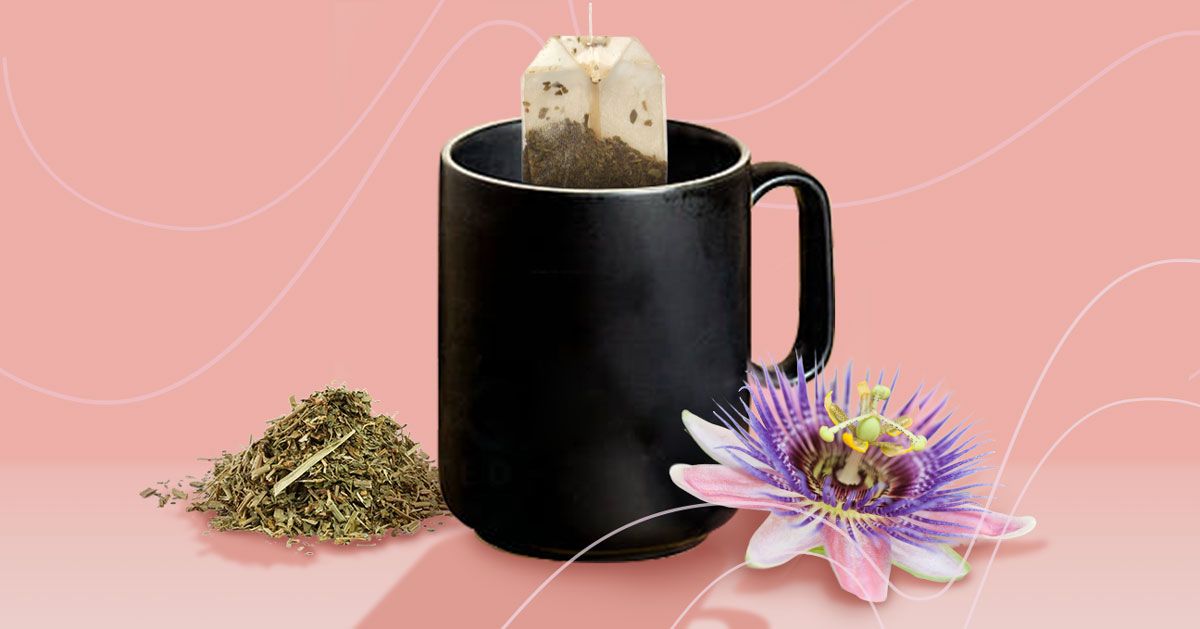
Passionflower, sometimes referred to as Passiflora or maypop, is a plant that’s long been studied for its powerful medicinal properties
Passionflower extract is available in tinctures and capsules and is widely used as an herbal supplement.
You can also brew the plant’s fresh or dried leaves into passionflower tea.
According to a review of nine studies, passionflower herbal preparations — including teas, syrups, and tinctures — could act as a natural sedative and help relieve anxiety
Another older study in 41 people showed that drinking 1 cup (237 mL) of passionflower tea per day for 1 week significantly improved subjective sleep quality, compared with placebo. However, newer research hasn’t replicated these findings.