


 Tiếng Việt
(NLDO) – Ancient tea trees have high economic value due to their many precious medicinal properties; the selling price of processed tea can range from 2.5 to 25 million VND/kg.
On the afternoon of August 26th, in Ho Chi Minh City, the Vietnam Culinary Culture Association (VCCA), in collaboration with Tay Bac Tea and Specialty Company Limited (Shanam tea brand), organized a seminar titled “Vietnamese Tea Civilization in Economic and Tourism Development”.
This is the first program in a series of seminars on “Vietnamese Tea Culture” organized by VCCA, which will be held monthly from now until the end of 2024, aiming to preserve and promote Vietnamese tea culture to a higher level. At the same time, it supports the development of the economic potential of Vietnamese tea by promoting and introducing high-quality Vietnamese tea products to consumers domestically and internationally .
Mr. Pham Vu Khanh, Chairman of the Shanam tea brand, said that he has been in the tea industry for 23 years and is closely associated with Vietnam’s ancient tea-growing regions, with many rare tea varieties, including Shan Tuyet tea from the Northwest highlands.
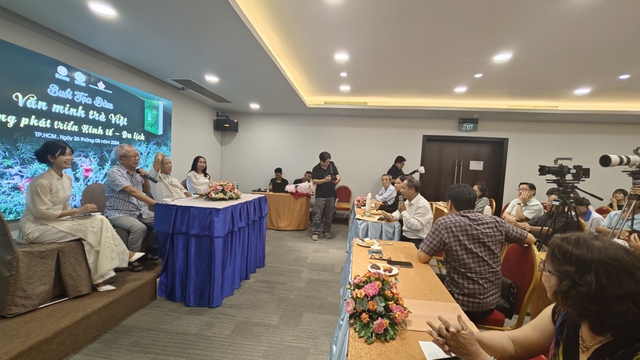
Scenes from the seminar “Vietnamese Tea Civilization”
He said that fresh tea leaves grown in lowlands cost an average of only 4,000-4,500 VND/kg, while the average export price of dried tea is only 2.5 USD/kg. However, tea leaves from ancient trees cost 60,000-80,000 VND/kg, and after processing, they can fetch prices from 2.5 to 25 million VND/kg. The most expensive type is infused with lotus and comes with a 10-year warranty.
Ancient tea is processed through fermentation, and the longer it is aged, the more valuable it becomes, similar to alcoholic beverages. With the development of processing and investment in experiential areas to attract tourists, businesses have helped develop the economy for the local people in the tea-producing region.
According to Mr. Khanh, Vietnam has approximately 20,000 hectares of ancient tea trees, concentrated in five provinces: Son La, Yen Bai, Ha Giang, Dien Bien, and Hoa Binh, with a very large production volume. Characterized by being woody trees but not considered valuable timber, and producing smoke when burned, they are not exploited. Many of these ancient tea trees are large in size and hundreds of years old. These trees grow from seeds, and their leaves can only be harvested at 7 years old, approximately every three months, and contain many medicinal properties.
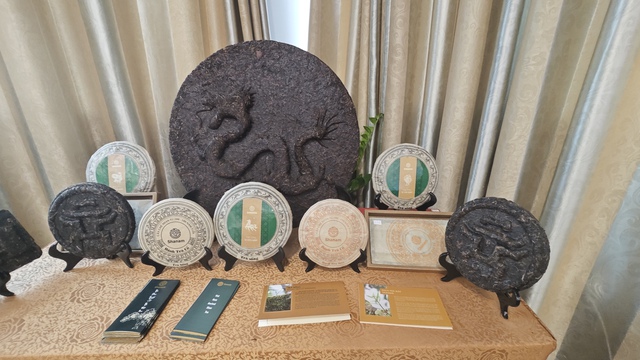
Ancient tea cakes made from centuries-old tea trees were displayed at the seminar.
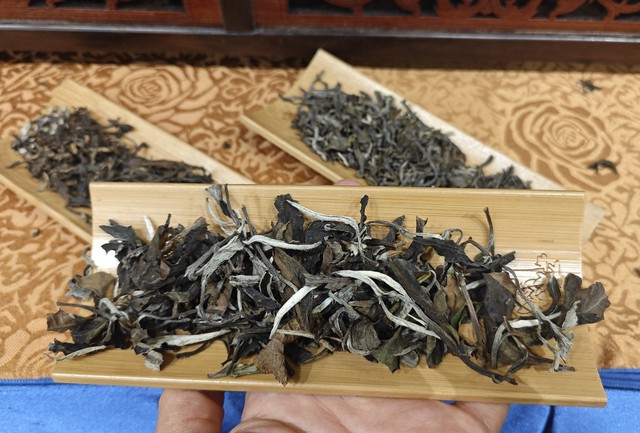
Ancient tea trees have high economic value.
At the seminar, researcher Trinh Quang Dung, author of the book “Vietnamese Tea Civilization,” provided further information, stating that some businesses have now turned tea products into investment items, as the longer tea cakes are aged, the more valuable they become. “With tea cakes, ‘three years is tea, five years is medicine’,” Mr. Dung said.
Mr. La Quoc Khanh, Vice President of VCCA, noted that tea has long been more than just a beverage; it’s also a symbol of culture and tradition in many countries. In Vietnam, tea is present in daily life and important ceremonies, from gatherings with friends to festivals. Vietnamese tea is known for its diversity in types and flavors.
Globally, countries like China, Japan, and India have successfully affirmed and promoted the cultural value of tea while also effectively utilizing its economic potential. These successes demonstrate that combining the cultural and economic values of tea is entirely feasible and yields long-term benefits.
